A Green Hill and a Poisoned Emperor

Hiya. Rosie Scribblah here with another tea-break podcast, just enough time for a cuppa tea and maybe a biscuit. This one is about the colour Green which I read about in Victoria Finlay’s book “Colour: Travels Through The Paintbox” and also a bit of local history thrown in from the area I lived in.

SWANSEA

I spent my early years in an area of Swansea called Greenhill, that’s the name in English and it’s Dyfatty in Welsh. It’s an old built-up inner-city area, very deprived and also a bit notorious. So why is it called Greenhill? It’s because centuries ago, before the Industrial Revolution it was indeed a beautiful Green Hill. The Welsh name, Dyfatty, means a Sheep Fold and was where sheep lived. Nearby there’s Cwmfelin and Brynmelin, the valley with the mill and the hill with the mill. They’re by Ysguborfach Street – that means a little barn, and right next to Dyfatty is an area called Hafod, Summer Pasture in English, where the sheep from Dyfatty hung out when it was fine. But all that went with the Industrial Revolution and these names are an echo of the green and bucolic past.

Green is an international colour so let’s go from Dyfatty to China…….

CELADON

Where once upon a time, there was a colour so secret it was said that only royalty could own it. It was found on a very special type of porcelain called mi se (mee ser) which means mysterious colour. Sorry for my pronunciation….. It’s also known as Celadon.

It was only made during the 9th and 10th centuries CE and for hundreds of years afterwards, people wondered what it looked like and why it was such a secret.  They knew it was some sort of green but that was it. 

Sometimes thieves or archaeologists …. hmm possibly the same thing?…..  would rob graves and greenish bowls claiming to be Celadon would appear in antique shops and museums.

Legends grew up about it, the best Celadon jars were believed to be sorcerers or djinns. Some were supposed to be able to talk. And Celadon bowls were meant to be an antidote to poison.

GAME OF THRONES

But nobody was sure if these were the real thing until 1987, when I had a curly perm,  when Celadon was found in a secret chamber in the ruins of a collapsed tower in China. It’s all a bit Game of Thrones here. Anyway, the archaeologists knew it was genuine because they also found a stone carved with an inventory.

This tower had been locked and hidden for 1000 years so after all this time the world was able to see the real mysterious colour. Dan Dan Dan…..

And it was a sort of dirty browney olive.  There wasn’t a clue why it was so prized by the ancient Tang dynasty.  Maybe it’s one of the earliest examples of less is more.  Who knows?

Let’s travel back from China to Europe …

WILLIAM WARHAM

The oldest piece of porcelain in the British Isles is green.  It’s the Warham cup and it’s a dark sea green pot mounted on a gold support probably given to William Warham, Archbishop of Canterbury in the early 1500s. When the trade routes opened up around that time, Europe went wild for what they called ‘Oriental’ culture which covered Japan and the Middle East as well as China and porcelain was massively popular. And massively expensive.

200 years later, the Romantic poets almost worshipped the colour because of how it represented the beauty of nature. Green was associated with Indian mysticism, with Persian poems and Buddhist paintings. And there was a craze lasting hundreds of years for green wallpaper, handpainted in China and ridiculously expensive – only the wealthiest could afford it. Like the Celadon pottery of the Chinese Emperors.

NAPOLEON

The French Emperor Napoleon was possibly poisoned by his green wallpaper. Back in 1960 a lock of his hair was bought at auction and chemically analysed and they found it contained a substantial amount of arsenic. The official cause of his death was cancer. But was it really? ….

Here’s a bit of science.

ARSENIC

Back in the day, a Swedish chemist, Carl Wilhelm Scheele, while he was investigating arsenic, came up with an astonishing green.  He patented it as Sheele’s Green and fair do’s he thought that people should be warned about how toxic it was when it went into production as a paint.

BUT his concerns were overridden by the manufacturers and it was used in paints and wallpapers everywhere. No Elfin Safety back then!

In the 1980s it was discovered that a sample of the wallpaper from Napoleon’s home on St Helena contained Sheele’s Green. The damp atmosphere on the island meant fumes from the paint would have spread throughout the rooms. So … was this what really saw Napoleon off?

Even though the green was seriously poisonous it was very widely used because there was no other way to make this colour and people loved it, they went nuts for it and other green paints were dull and not easy to make.

Here’s a bit of art history.

SCHRECKSTEIN

Back in the 1400s, an artist called Cennini (again please excuse my pronunciation) had a list of ways of making various greens, either by mixing blue and yellow or using copper based minerals from nature to make a pure green, and there were a few of those.

The first one is Malachite, a gorgeous mineral stone, it’s LUSH and it’s found in copper mines and until the late eighteenth century was called Schreckstein or Scary Stone in Germany because it was used to frighten demons and protect against evil spirits. The ancient Egyptians used it in paintings and in makeup, it was green eye shadow, and eighth century Chinese artists used it for painting the halos of Buddhas.

The next green, going back to the 1400s and Cennini, he was on about Verdigris, which was very beautiful but didn’t last. It was made by suspending a piece of copper metal over a bath of vinegar.  After a few hours a green deposit would be left on the copper.

VAN EYCK

Flemish artists in Northern Europe found a way of preserving the colour by using a special varnish and in 1434 the artist Van Eyck used it to paint the skirt in the very famous painting, The Arnolfini Marriage. And he became so famous for using it that it’s now called Van Eyck Green.

In the 1700s papers and paints made from Verdigris were fantastically popular in American interior decoration and the Persians used it until the beginning of the twentieth century.  Green is the colour of the Prophet Mohammad’s cloak and in Eastern miniature paintings, very important men were given Verdigris halos.

But this paint wasn’t just the colour of holiness and power in these miniatures. It was also the colour of sex, oooooh, because the garden, and nature, was the symbol of love. The wilderness was seen as a place where anything goes so featured in a lot of mildly erotic miniatures.

Now miniature painting was popular in Persia and in India, but the green in Indian miniatures burns the paper around it slightly, but not in the Persian ones. It turns out that Persian artists mixed their Verdigris paint with saffron and this stopped it from burning the paper, a recipe that was re-discovered in the late 20th century in a medieval Persian love poem of all things.

In the Rijksmuseum in Amsterdam there is an example of a Japanese woodcut that uses the way green burns paper. In 1887 Tagahora Kunichika depicted a ghost rising out of a body and coloured the head green which burns the surrounding paper to give a very eery effect.

LO KAO GREEN

In 1845 a green dye from China swept the Western world. The French brought it back n the form of mud which was added to water.  The mud was made in China from the bark of two varieties of Buckthorn trees. The bark was stripped, and boiled for several days. Then a cloth was thrown into it. The cloth was taken outside in the morning and left to dry until midday. Where the sun had dried it, it would turn green. The cloth was then boiled until the green pigment soaked off. The sediment was collected, dried and sold for great riches to the West. Who discovers these things? It was called Lo Kao Green, sorry about my pronumciation.

In the second half of the nineteenth century coal tar dyes started to appear and the incredibly expensive Lo Kao Green disappeared almost overnight. After that the new chemical dyes and pigments started heading East because they were cheaper and brighter.  Natural dyes that were meant to depict and celebrate nature were displaced by new technology which did it better.  And cheaper.

So we’ve been around the world a bit, now…..  

GREENHILL

Back to Greenhill / Dyfatty. Is it green again? Well over the years there have been some improvements. The slums I lived in when I was tiny were cleared away and replaced with multi-story flats in parks. There’s a woodland area and a lovely early 20th century bowling green with a manicured lawn and an electric fence around it to keep the urban foxes off it. It’s still very built-up and it’s an area of high deprivation, but the green is returning, nature is taking a hold and the future might well be a Green Hill again. If you liked what you heard, check out Victoria Finlay’s book and also the local info about place names came mostly from a Facebook group, Swansea and it’s history, a lovely group of people.   So check that out as well. Bye for now, speak to you again with another colour – hmmmm …. I think it’ll be brown next, which gets really gory…… Hwyl Fawr.

A Chance To Own One Of My Artworks

I have some small screenprints for sale, inspired by my drawings of the taxidermy collection at Swansea Museum. I have given these antique artifacts a modern twist by combining them with images of rubbish – old fruit nets, bubble wrap and plastic – highlighting the problem of human pollution and how it affects wildlife.

To buy my work on the Swansea Print Workshop site please click the image to the left and to see the complete image.

20 percent of the cost of each screenprint sold goes to support Swansea Print Workshop, which receives no public funding.

And The Cat Helped …..

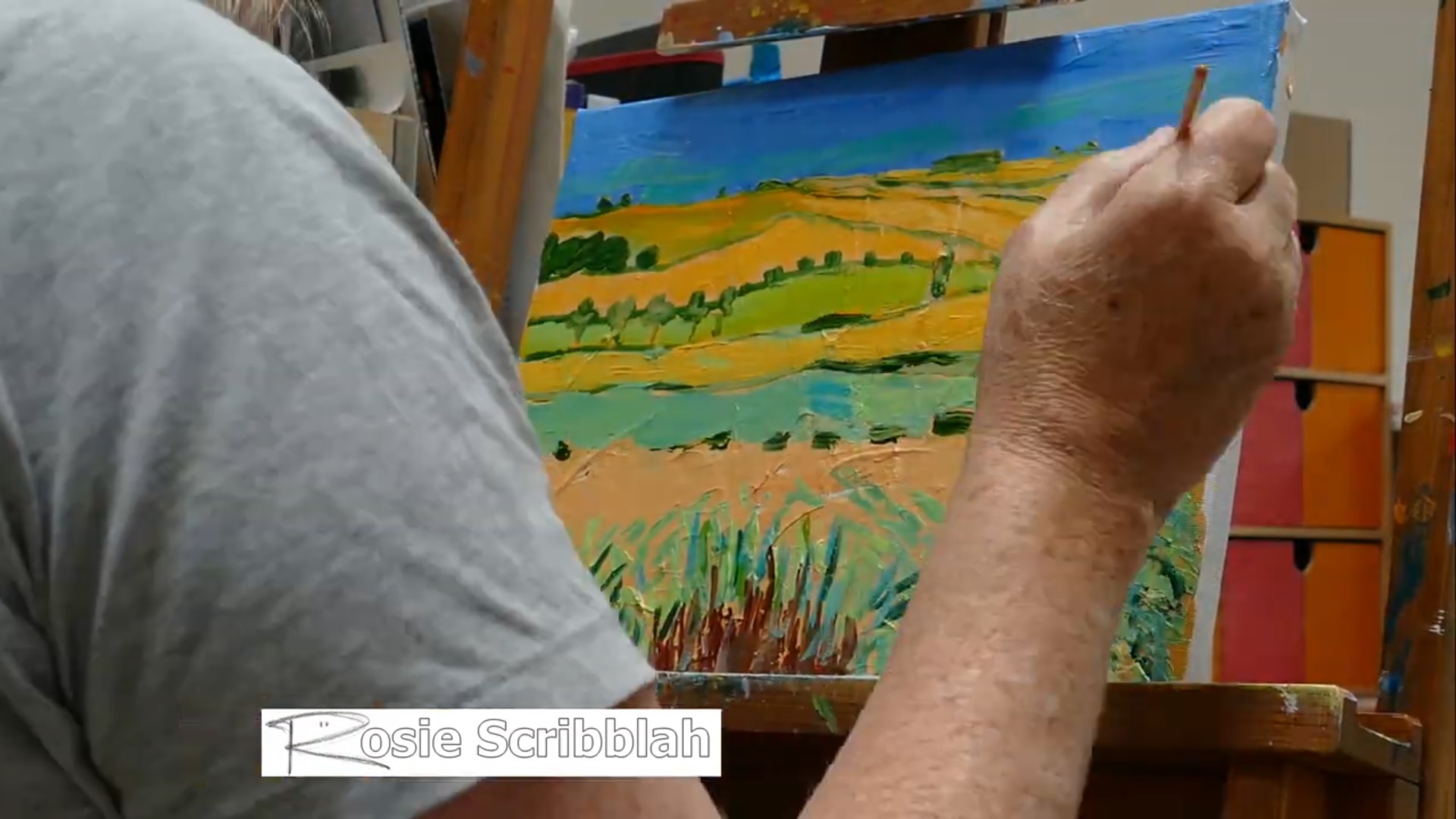
Painting van Gogh’s bedroom in under a minute – and the cat helped too. Husb films me when I’m faking on Fridays with Ed Sumner’s Cheese and Wine Painting Club over on Facebook and then edits several hours of painting into around a minute. It took about 6 hours really.

A Chance To Own One Of My Artworks

I have some small screenprints for sale, inspired by my drawings of the taxidermy collection at Swansea Museum. I have given these antique artifacts a modern twist by combining them with images of rubbish – old fruit nets, bubble wrap and plastic – highlighting the problem of human pollution and how it affects wildlife.

To buy my work on the Swansea Print Workshop site please click the image to the left and to see the complete image.

20 percent of the cost of each screenprint sold goes to support Swansea Print Workshop, which receives no public funding.

Framing The Model

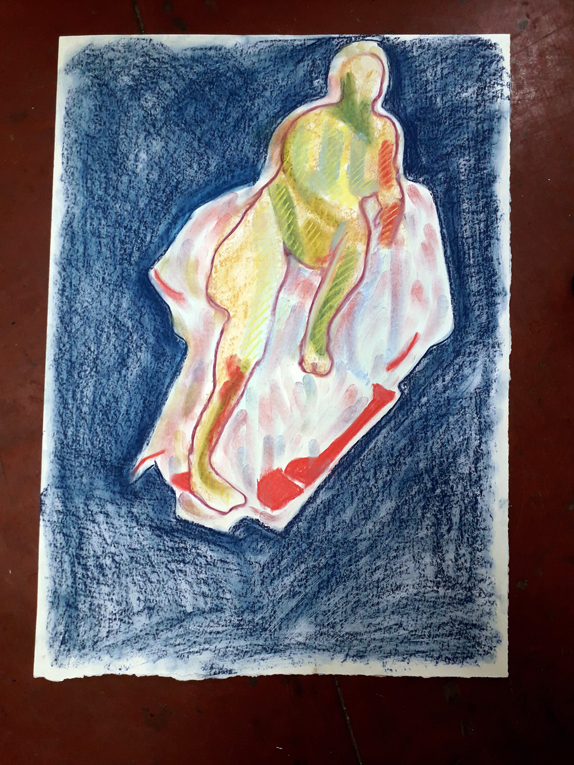
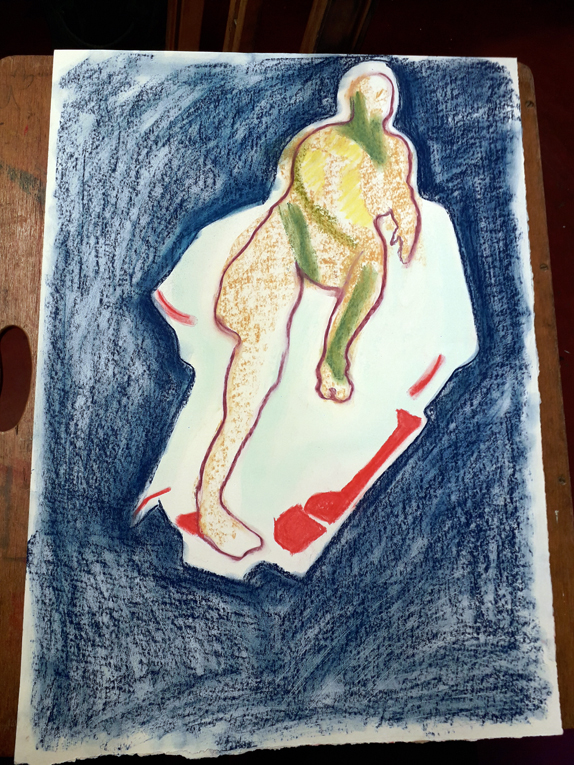
Here’s the last life drawing I did at this week’s session, it’s a 50 minute pose and I used Daler Rowney Artist’s soft pastels onto a heavyweight vintage paper. It’s always a bit of a problem fitting the model onto the paper, so framing the subject is important. I decided to put our model into the background so I could fit him all in and emphasised the geometric shapes of the materials and cushions he was sitting on to fill up the rest of the paper.

The pastels are gorgeous. They’re nice to scribble with but they really shine with saturated pigment when I rub them with my fingers, releasing the oils and vibrant colours. Rubbing emphasises the rough texture of the beautiful paper as well.

A Chance To Own One Of My Artworks

I have some small screenprints for sale, inspired by my drawings of the taxidermy collection at Swansea Museum. I have given these antique artifacts a modern twist by combining them with images of rubbish – old fruit nets, bubble wrap and plastic – highlighting the problem of human pollution and how it affects wildlife.

To buy my work on the Swansea Print Workshop site please click the image to the left and to see the complete image.

20 percent of the cost of each screenprint sold goes to support Swansea Print Workshop, which receives no public funding.

A Bit Skewiff

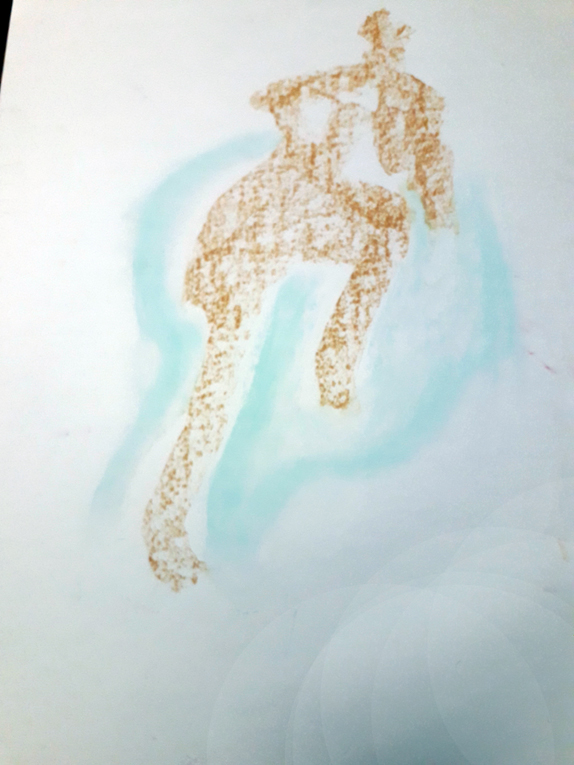
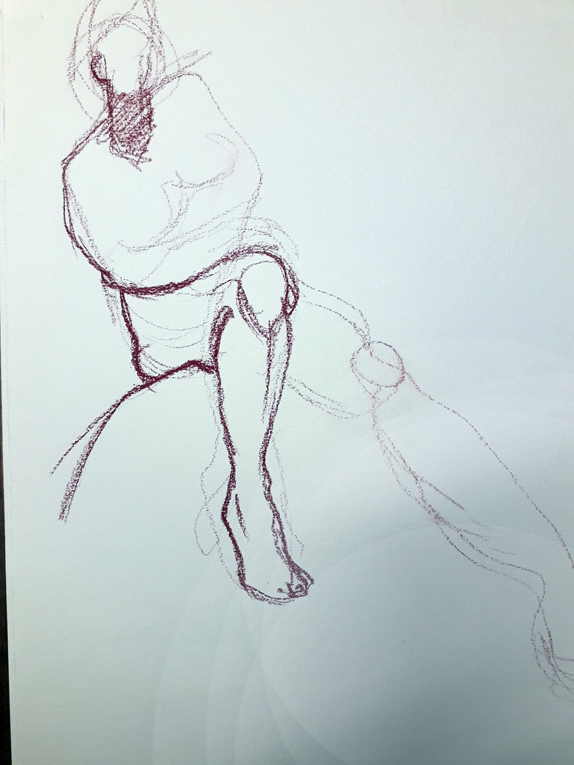
Here’s a 30 minute drawing from the life drawing session at Swansea Print Workshop the other evening. I went a bit skewiff with this one, with some deliberately wobbly lines, having a bit of fun with the shapes and pushing myself away from representational drawing. I’m using Daler Rowney soft pastels onto vintage paper.

A Chance To Own One Of My Artworks

I have some small screenprints for sale, inspired by my drawings of the taxidermy collection at Swansea Museum. I have given these antique artifacts a modern twist by combining them with images of rubbish – old fruit nets, bubble wrap and plastic – highlighting the problem of human pollution and how it affects wildlife.

To buy my work on the Swansea Print Workshop site please click the image to the left and to see the complete image.

20 percent of the cost of each screenprint sold goes to support Swansea Print Workshop, which receives no public funding.

Taking Liberties

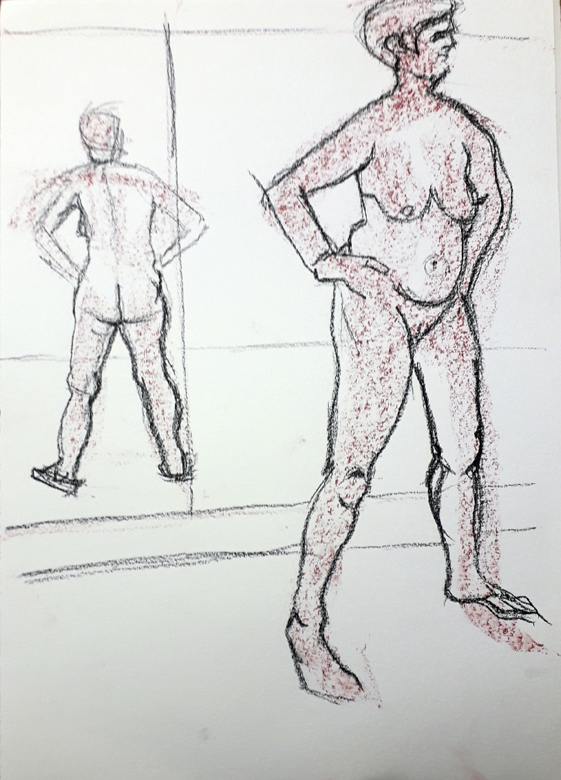
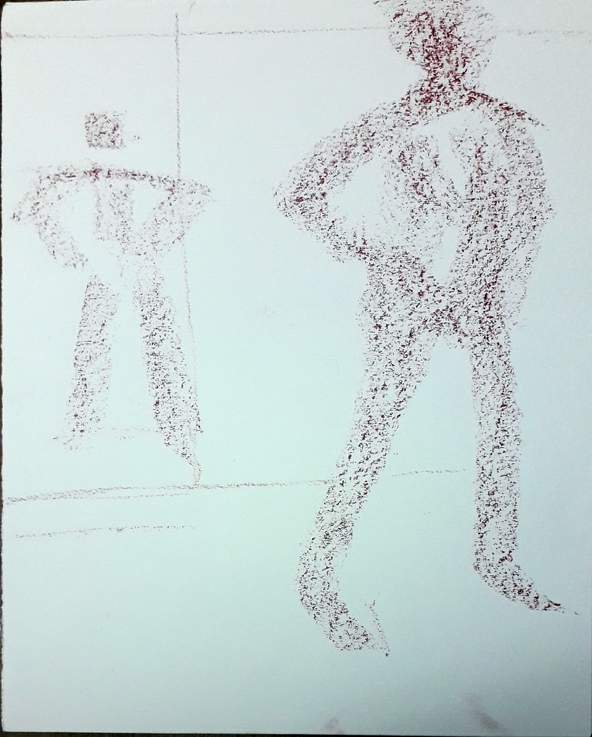
Here’s another life drawing from yesterday evening’s session at Swansea Print Workshop. I use standard sheets of paper and rarely cut them into another shape, which I suppose is a bit lazy. It’s often difficult to fit the subject into the paper without either cutting bits off or having lots of empty space. I love the work of the Austrian artist Egon Schiele, who happily distorted human figures to fit his paper, so I gave it a go with this one. Our model isn’t shaped like this, I took liberties.

A Chance To Own One Of My Artworks

I have some small screenprints for sale, inspired by my drawings of the taxidermy collection at Swansea Museum. I have given these antique artifacts a modern twist by combining them with images of rubbish – old fruit nets, bubble wrap and plastic – highlighting the problem of human pollution and how it affects wildlife.

To buy my work on the Swansea Print Workshop site please click the image to the left and to see the complete image.

20 percent of the cost of each screenprint sold goes to support Swansea Print Workshop, which receives no public funding.

Just Back …..

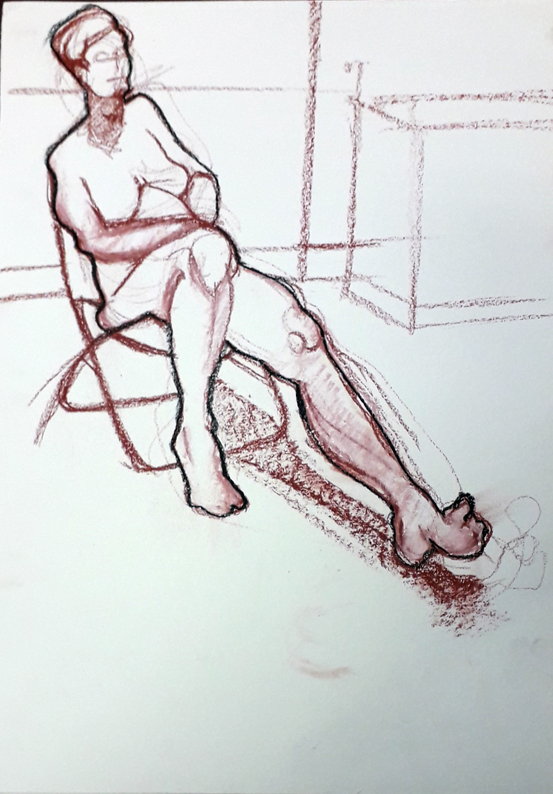
Just back from life drawing at Swansea Print Workshop. It’s late and I’m off to bed soon. Here’s a 10 minute pose from our brilliant model. I drew with sanguine and black conte crayons onto vintage paper.

Nos Da, Good Night

From Sketch To Drawing

I have sketchbooks stuffed full of drawings stuffed into cupboards but I rarely work from them, once they’re done they tend to be forgotten. So I’ve decided to go back to them and try and develop something using different materials.

This is a recent sketch in ballpoint pen done in a local quarry. It’s linear and very much about mark making and I wanted to take it into colour so I used soft oil pastels (Daler Rowney) onto a very textured heavyweight Khadi handmade paper. I’ve been looking at some other artists whose use of colour I admire – historically Gabriele Munter and contemporary artists Christian Niblo Lloyd and Aletha Kuschan and they’ve inspired me to try and let go of my almost obsessive detailed ballpoint sketching into something more expressive.

A Chance To Own One Of My Artworks

I have some small screenprints for sale, inspired by my drawings of the taxidermy collection at Swansea Museum. I have given these antique artifacts a modern twist by combining them with images of rubbish – old fruit nets, bubble wrap and plastic – highlighting the problem of human pollution and how it affects wildlife.

To buy my work on the Swansea Print Workshop site please click the image to the left and to see the complete image.

20 percent of the cost of each screenprint sold goes to support Swansea Print Workshop, which receives no public funding.

Finally Finished Vincent’s Bedroom

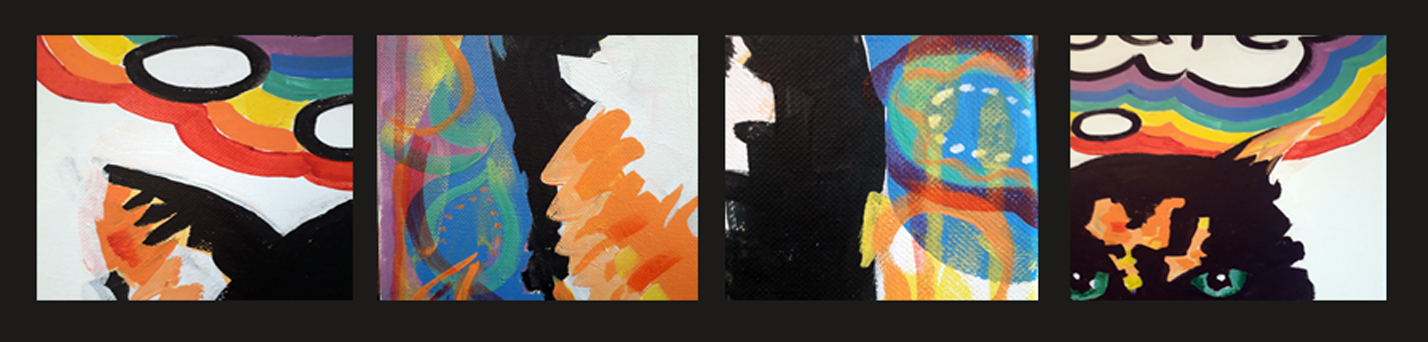
I finally finished faffing with van Gogh’s painting of his bedroom in Arles. I started it a few weeks ago on one of painter Ed Sumner’s Zoom tutorials. It’s a lot more complex than it looks. Vincent’s brushwork is multi-layered and his composition, although it looks simple, has some difficult distorted perspective. Of course I can still see loads that could be improved upon, but I need to stop and carry on with something else. I painted in Liquitex heavy body acrylics onto a stretched and primed canvas. Here are some of the stages of the apinting.

A Chance To Own One Of My Artworks

I have some small screenprints for sale, inspired by my drawings of the taxidermy collection at Swansea Museum. I have given these antique artifacts a modern twist by combining them with images of rubbish – old fruit nets, bubble wrap and plastic – highlighting the problem of human pollution and how it affects wildlife.

To buy my work on the Swansea Print Workshop site please click the image to the left and to see the complete image.

20 percent of the cost of each screenprint sold goes to support Swansea Print Workshop, which receives no public funding.

Copper Crucibles Part 2: The Raku Firing

I went along to a raku firing this evening, headed up by local ceramicist Esther Ley at the National Waterfront Museum. I’d made some little clay crucibles a while back – part of the Swansea University Copperworks Project – and today was the decorating and firing session. They had already been fired once, the bisque firing, so today we decorated our tiny pots with wax resist, various oxides as liquids and solidified in wax, and glazes – one transparent and one white. I did 10, here are the five I’m happy with. A 50% success rate isn’t bad at all for raku.

A Chance To Own One Of My Artworks

I have some small screenprints for sale, inspired by my drawings of the taxidermy collection at Swansea Museum. I have given these antique artifacts a modern twist by combining them with images of rubbish – old fruit nets, bubble wrap and plastic – highlighting the problem of human pollution and how it affects wildlife.

To buy my work on the Swansea Print Workshop site please click the image to the left and to see the complete image.

20 percent of the cost of each screenprint sold goes to support Swansea Print Workshop, which receives no public funding.

Little World In The Woods

I’ve been on holiday, visiting relatives in the North of England, a lovely break from the pandemic routine and the first time I’ve seen my family in about 18 months – too long but there we go. My littlest relative took me to see his special place in the local woods. He calls it Garlicville because it’s covered in wild garlic in the Spring. There’s a little stream running through the tall, dense trees and he’s been building a bridge across it with sticks he’s picked up from the ground.

He carried on building his little bridge and I sat on a moss covered trunk and sketched him. Not a particularly good sketch, I had promised myself I’d take a week off doing any art – it was a holiday after all – but I couldn’t resist quickly drawing him making his little world in the woods. I used white, black and sanguine conte crayons into a brown paper spiral bound sketchbook.

A Chance To Own One Of My Artworks

I have some small screenprints for sale, inspired by my drawings of the taxidermy collection at Swansea Museum. I have given these antique artifacts a modern twist by combining them with images of rubbish – old fruit nets, bubble wrap and plastic – highlighting the problem of human pollution and how it affects wildlife.

To buy my work on the Swansea Print Workshop site please click the image to the left and to see the complete image.

20 percent of the cost of each screenprint sold goes to support Swansea Print Workshop, which receives no public funding.