The School Stone Redrawn

Cockett Valley stone graphite


I’ve been travelling around South Wales drawing ancient stone monuments in the field but I’ve now started to look at the drawings and photos to decide how to develop them; maybe more complex drawings or mixed media pieces: etchings or linocuts? The first stage in this process for me is to do some small ‘thumbnail’ sketches from my original drawings and site photographs. These thumbnails help me get more acquainted with the subject as the field drawings are done very quickly and intuitively.

I’ve drawn with a fine graphite stick (6B) onto a small piece of heavyweight textured paper from the Tate Gallery shop that I had prepared by sponging lightly with a sepia wash. It’s a beautiful paper with deckled edges. This is the Cockett Valley Stone, found on the playing fields of a local comprehensive school.


I’ve been travelling around South Wales with archaeologist Dewi Bowen, who is researching his new book on Neolithic / Bronze Age monuments. His previous book on the stones of Ancient Siluria (South East Wales) can be found here. Also with us  is film maker Melvyn Williams, recording a documentary about our experiences. Some of Melvyn’s short films can be seen here. If you want to see some of my other artworks, please click here.

Battle Mountain, Little Mountain

Tower
The tower on Mynydd Cadle Common

Sometimes when I go out to sketch, the scenery is so atmospheric and so fleeting that only photographs will do. This evening was one of those times. Husb and I were driving along Mynydd Newydd (New Mountain) Road which bisects Mynydd Bach (Little Mountain) Common to the northside and Mynydd Cadle (Battle Mountain) Common to the southside and I saw the incredible late evening light hitting the Tower on Mynydd Cadle. Husb’s family hail from this area and I’ve heard many fleeting references to ancient battles but I’m not sure when they happened.

trees

It’s a semi-rural area and home to many species. As the sun set I caught these trees outlined against the vivid clouds.

fence

Turning towards Mynydd Bach common and looking West into the setting sun, the West Wales coast is just there in the distance.


I’ve been travelling around South Wales with archaeologist Dewi Bowen, who is researching his new book on Neolithic / Bronze Age monuments. His previous book on the stones of Ancient Siluria (South East Wales) can be found here. Also with us  is film maker Melvyn Williams, recording a documentary about our experiences. Some of Melvyn’s short films can be seen here. If you want to see some of my other artworks, please click here.

Cool Sea. Hot Sky.

2016 Midsummer


Husb and I went out to look for the Midsummer sunset this evening from the top of one of the city’s hills. I had a bit of a scribble, looking South West across Swansea Bay. The still sea was misty and smudged into layers of pale cool blues interspersed with pinky-purply smears. I drew into my Daler Rowney ‘Ebony’ sketchbook with Daler Rowney artist pastels,

Midsummer

I turned around to face North West and just had time to take a couple of photos of the sun setting over the hill, throwing fire across the sky. And from now on, the nights will be drawing in again. Ho hum.


I’ve been travelling around South Wales with archaeologist Dewi Bowen, who is researching his new book on Neolithic / Bronze Age monuments. His previous book on the stones of Ancient Siluria (South East Wales) can be found here. Also with us  is film maker Melvyn Williams, recording a documentary about our experiences. Some of Melvyn’s short films can be seen here. If you want to see some of my other artworks, please click here.

On Midsummer’s Eve

Rhossili


One lovely thing about having visitors is that we get to take people around the great places locally; it’s easy to be complacent about your home and take it for granted. It’s good to see your locality through the eyes of others. Today I took my friend down to Rhossili Bay at the furthest point of the Gower Peninsula. Using Dewi Bowen’s archaeology book as a guide, we climbed up over Rhossili Downs to find ancient stones. Despite the gorgeous Midsummer sunshine, there was a brisk wind which made it difficult to draw. I settled into the heather at the top of the Downs, just past the Trig Point, with the three jagged points of a ruined burial chamber (one of the group called Sweyne’s Howes) in the foreground and the Worm’s Head seeming to swim out to sea in the background. It’s an absolutely glorious location; Rhossili is one of the top 10 beaches in the world and the ancestors sussed it about 5,000 years ago. I drew onto prepared Fabriano Accademica paper with Daler-Rowney artist’s soft pastels.


I’ve been travelling around South Wales with archaeologist Dewi Bowen, who is researching his new book on Neolithic / Bronze Age monuments. His previous book on the stones of Ancient Siluria (South East Wales) can be found here. Also with us  is film maker Melvyn Williams, recording a documentary about our experiences. Some of Melvyn’s short films can be seen here. If you want to see some of my other artworks, please click here.

A week of vigils…

Another local artist has been drawing at vigils this week. So sad that these dreadful things happen ……

pattimcjones's avatarPATRICRAFT

In remembrance of the 49 who died in Orlando, 200 people gathered in Swansea’s Castle Square to light candles and sing ( ‘Something Inside So Strong’by Labi Siffre). I have started to do a simple sketch or two at each action I attend; in this case I drew the last person to leave the vigil. He was a student who patiently kept on lighting the candles on the steps:

Student

A day later I was in the Square again, this time with only a handful of people (it was very short notice) and for only a short time. Long enough to listen to Stephen Kinnock pay tribute to Jo Cox’s many achievements (including having persuaded the PM to accept 3,000 child refugees from Syria recently):

WP_20160618_004 (2)

The people of Swansea will continue to side with the oppressed,  marginalised and in this case, martyred. We may be only a small axe but we deliver a resounding’no pasaran’ to…

View original post 5 more words

Visiting Joe Bach

rose indienne

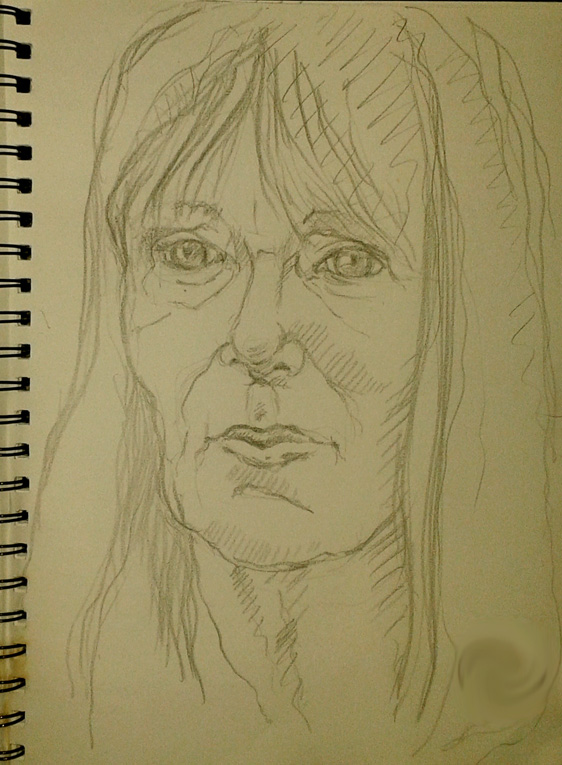
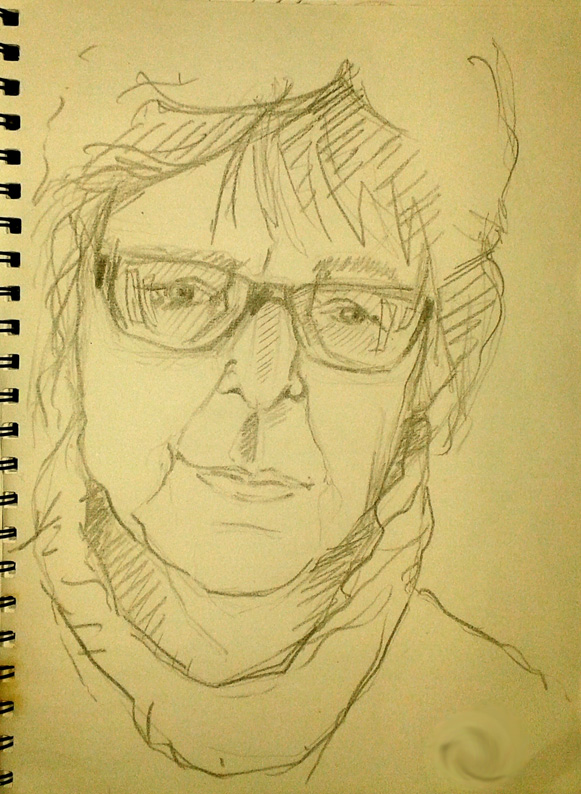
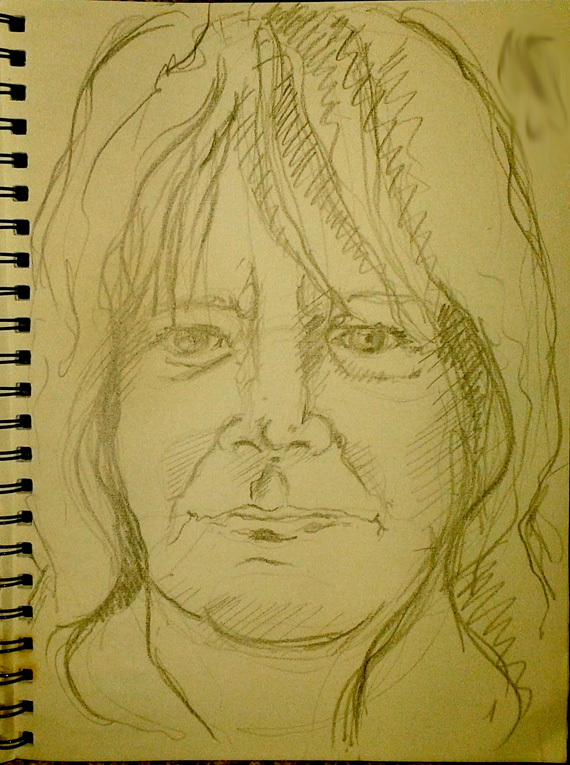
We have a friend visiting so we were out and about most of the day, taking in some galleries and museums. I think the best was the show of Josef Herman drawings and paintings at Swansea Museum. He was known affectionately as Joe Bach during his years in Wales and he spent much of his art career recording the ordinary people around him and I guess that’s what I do with my sketchbooks most of the time. We went to a local curry house later where I quickly scribbled these two sketches.


I’m currently working on a series of expressive drawings of ancestral sites and if you want to see some of my other artworks, please click here.


Shared from WordPress

A terrific blog about colour from Victoria Finlay

The meaning behind the many colors of India’s Holi Festival – http://wp.me/pXc3m-9y

Close Up

Maen Llia 1

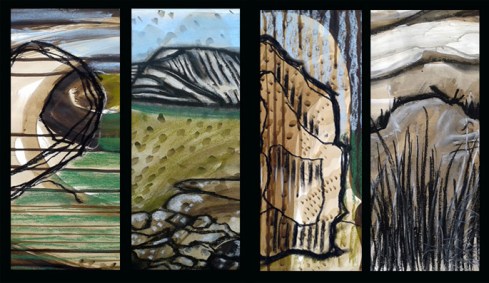
Here’s a closer view of the drawing I did of Maen Llia yesterday. We drove up to the Black Mountains in changeable weather but, as often happens, as soon as we stopped the car, thick black clouds loomed over the hills and dropped torrential rain onto us. Nearly Midsummer and we’re huddled in the rain!!!! Anyway, it cleared up after a while and I walked through the mud down to the stone which is a couple of hundred yards from the road. I worked on top of some Fabriano Accademica paper prepared with charcoal, white acrylic paint and my own home-made walnut ink. When I was preparing the paper, I was allowing myself to be influenced by impressions and memories of the landscapes I had been visiting on my hunt for the wild megalith. I drew firstly with compressed charcoal, drawing lines over and over again, taking a sensory pleasure in just drawing lines. Lines are beautiful. Then I chose from my box of Daler Rowney soft pastels and worked in impressions of sky, hills, pasture, mosses, lichens.

I overlaid the stone onto the background, without making it solid, keeping a transparency because that’s sort of how I feel about the stones, that they are echoes from the ancestors overlaid onto modern life; they are mostly not noticed by us, even less understood, hiding in plain sight.


I’ve been travelling around South Wales with archaeologist Dewi Bowen, who is researching his new book on Neolithic / Bronze Age monuments. His previous book on the stones of Ancient Siluria (South East Wales) can be found here. Also with us  is film maker Melvyn Williams, recording a documentary about our experiences. Some of Melvyn’s short films can be seen here. If you want to see some of my other artworks, please click here.


The Licking Stone

Maen Llia 2


I’ve been travelling around South Wales drawing ancestral stones since February and today I paid a return visit to Maen Llia. I loved it so much the first time that I wanted to go back and draw it again from a different angle and also to spend some time there absorbing the atmosphere. Last time I drew the stone from a distance but today I went up really close and was surprised to see that it’s made of uncharacteristic red sandstone, heavily pitted over its surface, interspersed with thick colonies of mosses and lichens. There was graffiti carved into it’s surface – from the 1860s! I walked down to the stream that it is reputed to sometimes drink from – Maen Llia translates from Welsh as ‘The Licking Stone’. It’s a magical site.


I’ve been travelling around South Wales with archaeologist Dewi Bowen, who is researching his new book on Neolithic / Bronze Age monuments. His previous book on the stones of Ancient Siluria (South East Wales) can be found here. Also with us  is film maker Melvyn Williams, recording a documentary about our experiences. Some of Melvyn’s short films can be seen here. If you want to see some of my other artworks, please click here.

Dead Nature

fruit bowl


I don’t often draw a still life, I don’t know why because it can be varied and interesting and you don’t have problems with the subject moving. The French phrase for ‘still life’ is ‘nature morte’ or dead nature which maybe a more accurate description. I drew this into my A5 leatherbound sketchbook using a Faber Castell Pitt drawing pen, size S in black.


I’m currently working on a series of expressive drawings of ancestral sites and if you want to see some of my other artworks, please click here.