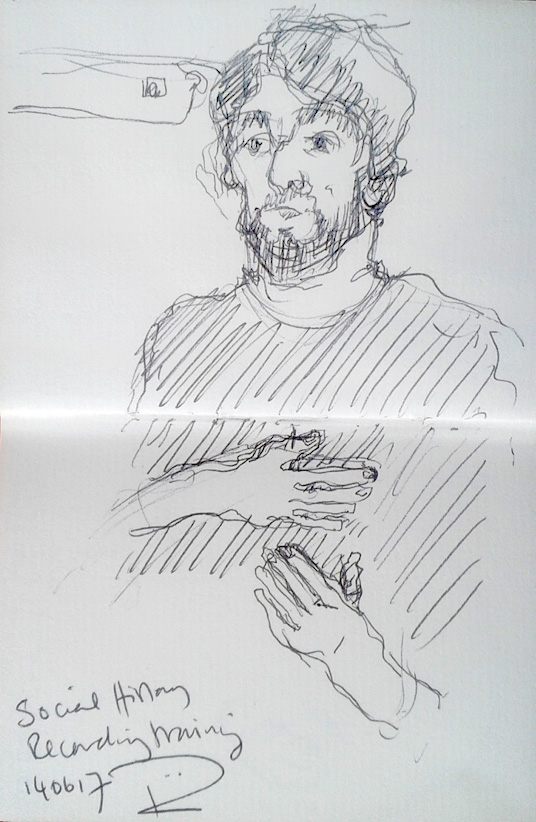
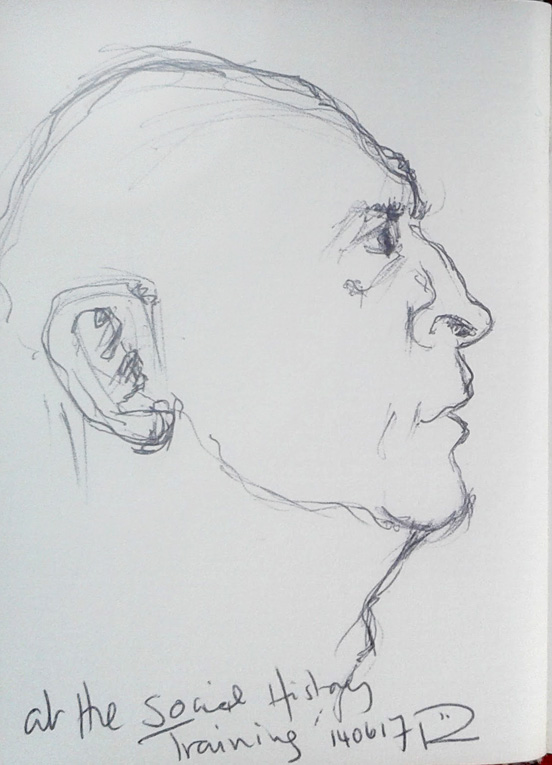
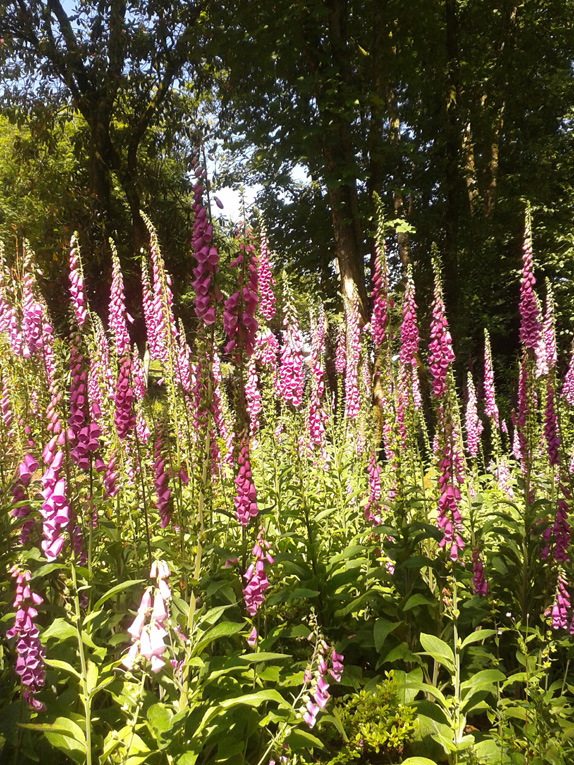
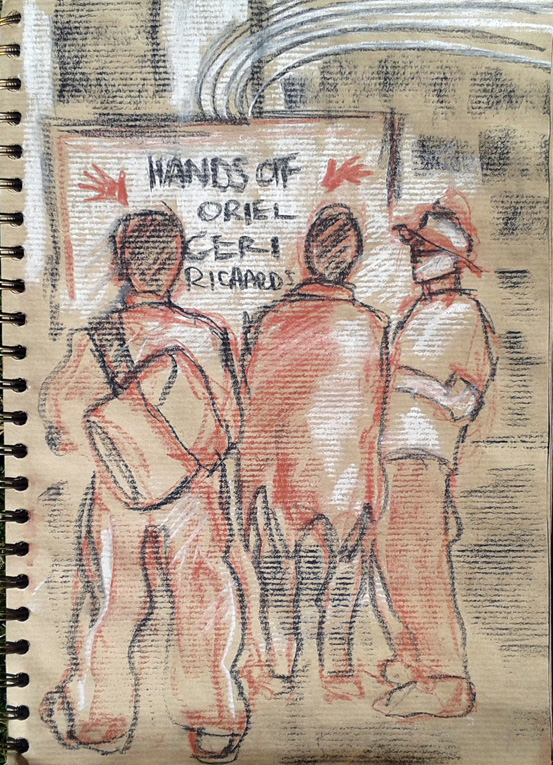
Just back from a culture vulture evening, with the opening of two exhibitions, at Galerie Simpson and Volcano and the monthly Storytelling at Tapestri. Swansea is buzzing with arty shenanigans tonight. Of course, I had to have a bit of a scribble …….
I have put my series of drawings of ancient Welsh monuments on Artfinder. Please click on the image below or the Artfinder link at the top right of this page if you’d like to see more of them. This one is Saint Elfys’ Stone in Pembrokeshire. That’s pronounced Elvis BTW 😀
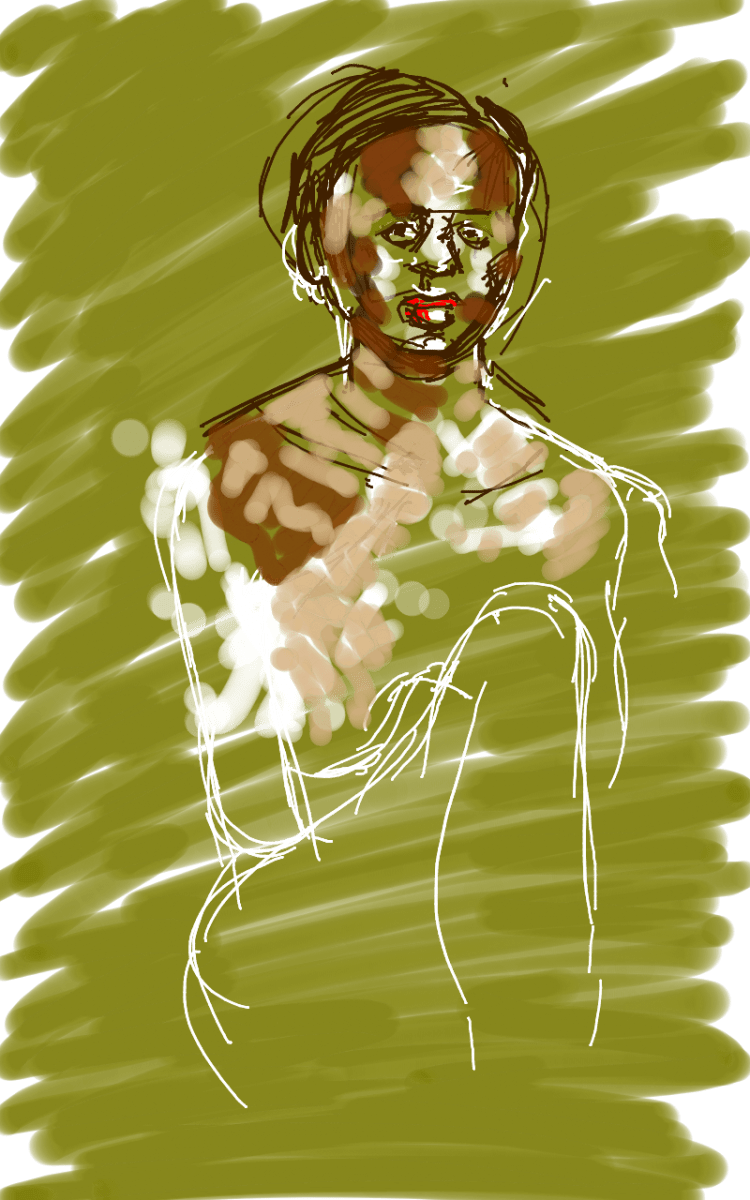
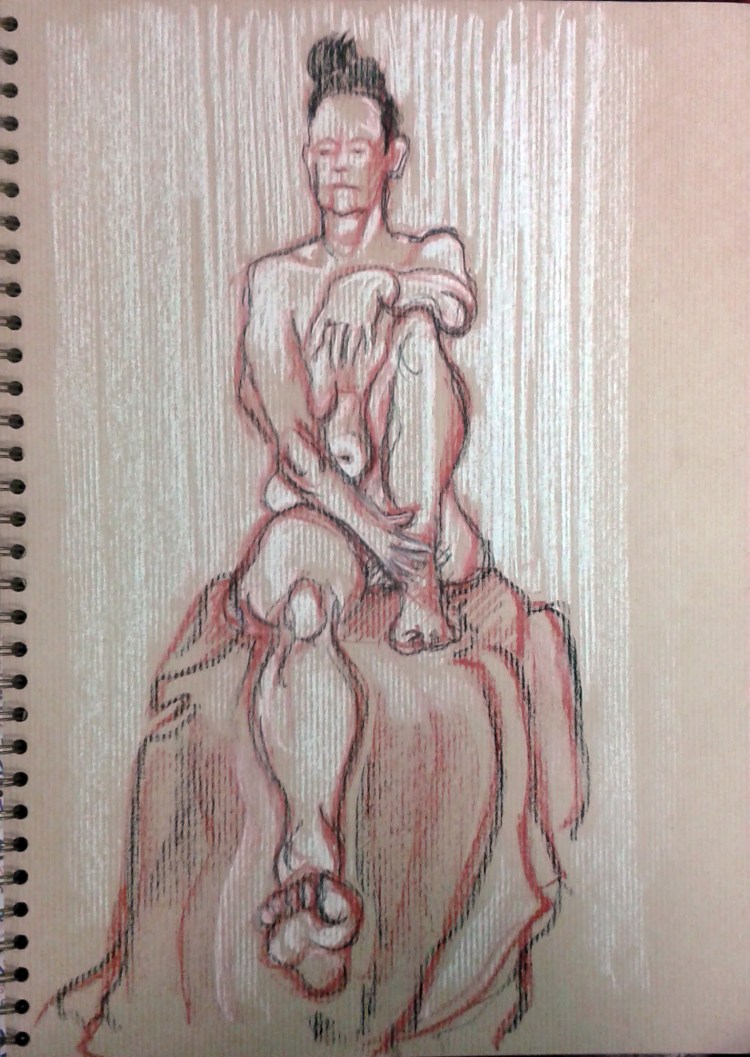
Just back from life drawing at Swansea Print Workshop. I can usually only manage to get there for the second half, 8.30 – 9.30 pm when we have one full-hour pose. I drew with white, sanguine and black conté crayons onto brown wrapping paper, it’s about A2 in size.
I did a few quick warmup sketches first to get used to the subject, you can just about see them under the final drawing. I don’t mind drawing over things, it adds an extra layer of interest – and saves money!
I have put my series of drawings of ancient Welsh monuments on Artfinder. Please click on the image below or the Artfinder link at the top right of this page if you’d like to see more of them. This one is Saint Elfys’ Stone in Pembrokeshire. That’s pronounced Elvis BTW 😀
I used a roller (brayer) to apply the home-made ink to the rubber stamp that I’d had made from my original design by http://www.speeedystamps.co.uk
Making art involves lots of processes, especially with something like printmaking. I made my own printing ink with Nori (seaweed) paste, ground mineral pigment, water and gin. But successful printmaking depends on so many different factors – the ink must be compatible with the printing block or plate and also with the paper. What make of paper? How heavy? What sort of surface? And wet or dry? All these have to be tested. Yesterday I tried out a simple vinyl block . Today I’m showing the results of printing with a rubber stamp onto a lightweight Hosho Japanese paper.
Pressing the inked stamp onto dry Hosho paperDidn’t work, the paper stuck to the stamp and peeled away.So I spritzed another piece of Hosho on the back with clean water and it worked very well.
I found the Hosho a bit too lightweight for both the block and the stamp. It’s a fine paper and crumples quite a bit when it’s damp so tomorrow I’ll show the results of working with a heavier paper.
I have put my series of drawings en plein air of ancient Welsh monuments on Artfinder. If you want to see more, please click on the image below or the Artfinder link at the top right of this page. This one is the legendary grave of Saint Elfys (Elvis) in Pembrokeshire, not for from the Presceli Mountains. Elfys? Presceli? Elvis Presley? Coincidence? hhhmmmm
Yesterday I showed how to mix up printmaking ink with powdered mineral pigments, Nori (seaweed) paste, water and gin. But that’s just the beginning. Next I had to try the ink with different blocks and papers to see what gives the best result. My first experiment was with a simple vinyl block that I inked with a roller (brayer) and printed using a traditional Japanese bamboo baren onto a lightweight Hosho Japanese paper. I tried it first with dry paper, but that was awful and the paper stuck to the ink and disintegrated. So I tried spraying the back of a piece of paper lightly with a water sprayer and again took the print with a baren. It worked quite well, much better than dry paper.
A simple block inked upPrinting onto dry Hosho paper with a barenThe paper stuck to the ink on the blockPrinting again after spritzing the back of the Hosho paperThe dry and damp Hosho papers
So tomorrow I’ll be having a go with a rubber stamp instead of a block……..
I have put my series of drawings en plein air of ancient Welsh monuments on Artfinder. If you want to see more, please click on the image below or the Artfinder link at the top right of this page. This one is the legendary grave of Saint Elfys (Elvis) in Pembrokeshire, not for from the Presceli Mountains. Elfys? Presceli? Elvis Presley? Coincidence? hhhmmmm
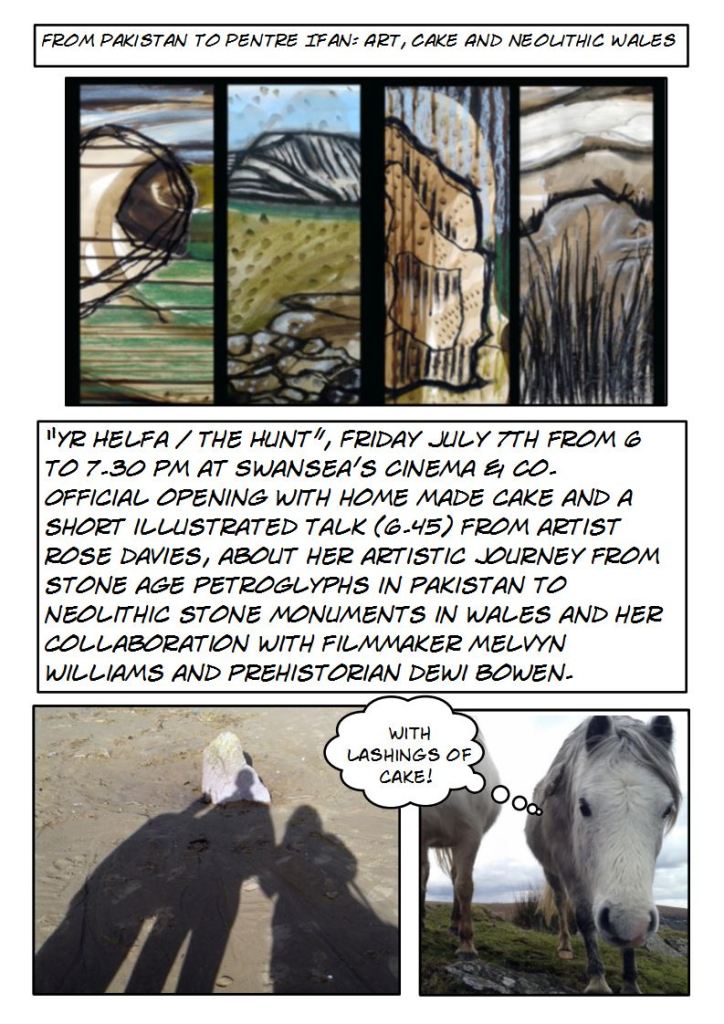
I have been experimenting with making a water-based printing ink, using a recipe from printmaker Shannon Yost published by Natural Earth Paint. There’s a comprehensive list of ingredients including Nori (seaweed) paste, powdered minerals and gin. The gin is for preserving the ink. Honest. 😀
Measure 1 tablespoon of natural powdered pigment.Add half a teaspoon of water and half a teaspoon of gin and mix it up with a chopstick.Turn it onto a palette and add 1 teaspoon of Nori paste.Mix it well with a palette knife.Roll a small amount on a smooth surface (I used acrylic sheet) with a roller (brayer).
Stage One completed. Tomorrow I’ll look at trying out different types of blocks and different papers…….
I have put my series of drawings en plein air of ancient Welsh monuments on Artfinder. If you want to see more, please click on the image below or the Artfinder link at the top right of this page. This one is the legendary grave of Saint Elfys (Elvis) in Pembrokeshire, not for from the Presceli Mountains. Elfys? Presceli? Elvis Presley? Coincidence? hhhmmmm
Here’s another drawing I did en plein air up the Rhondda Valley last week. We stopped at a viewing place called Carn Eiddil and walked to the top of a pile of large rocks to look down the valley dropping away sharply beneath and there on the slope were loads of tiny memorials. They’re mostly crosses, some simply made of wood, others beautifully constructed from metal and most commemorate people, just a few are dedicated to pets.
I have put my series of drawings en plein air of ancient Welsh monuments on Artfinder. If you want to see more, please click on the image below or the Artfinder link at the top right of this page. This one is the legendary grave of Saint Elfys (Elvis) in Pembrokeshire, not for from the Presceli Mountains. Elfys? Presceli? Elvis Presley? Coincidence? hhhmmmm
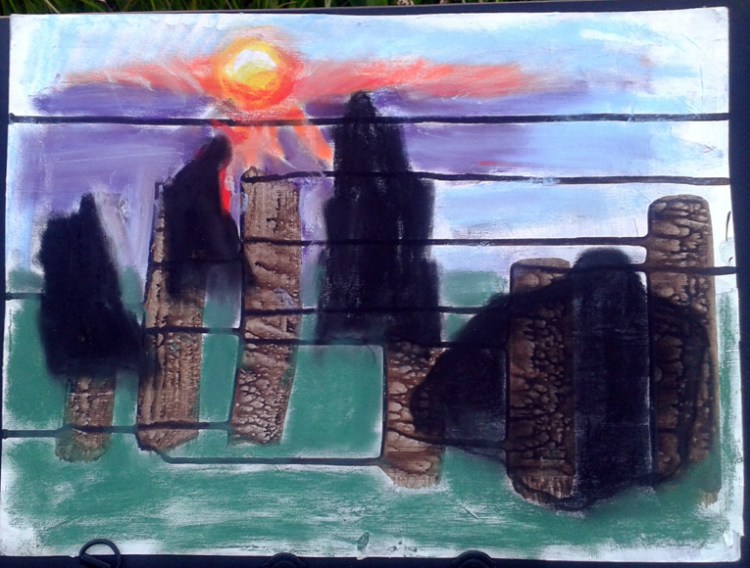
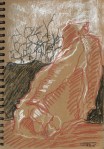
This is the third drawing I did at Maen Ceti / Arthur’s Stone at Cefn Bryn on the Gower Peninsula this week. I used a piece of Fabriano paper that I had prepared with two coats of textured acrylic gesso. When it was dry, I sponged some of my home-made walnut ink over it. The ink pooled at random, giving a spotty sort of texture. This seemed to reflect the texture on the massive capstone itself, covered with colonies of lichens. I drew with conté crayons in black, sanguine and white.
I have put my series of drawings en plein air of ancient Welsh monuments on Artfinder. If you want to see more, please click on the image below or the Artfinder link at the top right of this page. This one is the legendary grave of Saint Elfys (Elvis) in Pembrokeshire, not for from the Presceli Mountains. Elfys? Presceli? Elvis Presley? Coincidence? hhhmmmm
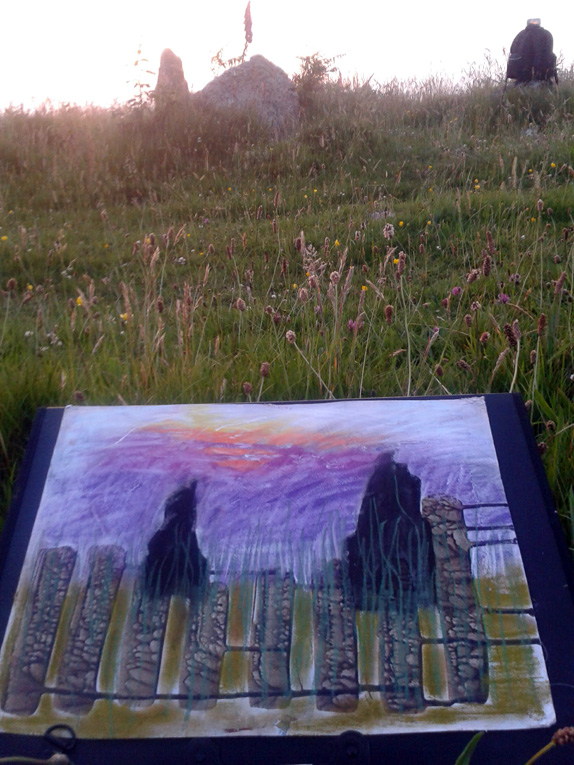
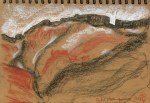
I was at Cefn Bryn on the Gower Peninsula yesterday, drawing at Arthur’s Stone – Maen Ceti in Welsh. It’s a Neolithic burial chamber surrounded by cairns, truly an ancient landscape of the dead. It’s a very popular site and I’ve drawn it many times, so it’s hard to come up with a new approach, a different angle, which is what I tried to do yesterday.
I drew with Daler Rowney artists’ soft pastels onto paper I’d prepared in advance with two layers of gesso and some of my home-made walnut ink, so there was already a great deal of abstract imagery on the surface. I kept the outline of the monument deliberately sparse, sketched lightly in white and then chose colours that matched those in the landscape to work with. The paper was already streaked horizontally with the brown walnut ink so I emphasised the horizontal stratification of the land and seascape by using the pastels in parallel with the walnut lines.
I did three drawings in all at the monument yesterday, the final one tomorrow!
Went hunting wild megaliths today, this time to Arthur’s Stone, Maen Ceti, a Bronze Age burial chamber on the Gower Peninsula. And now I’m tired ……….. Goodnight 😀