The Speaking Stone

Cwrt Sart school 1

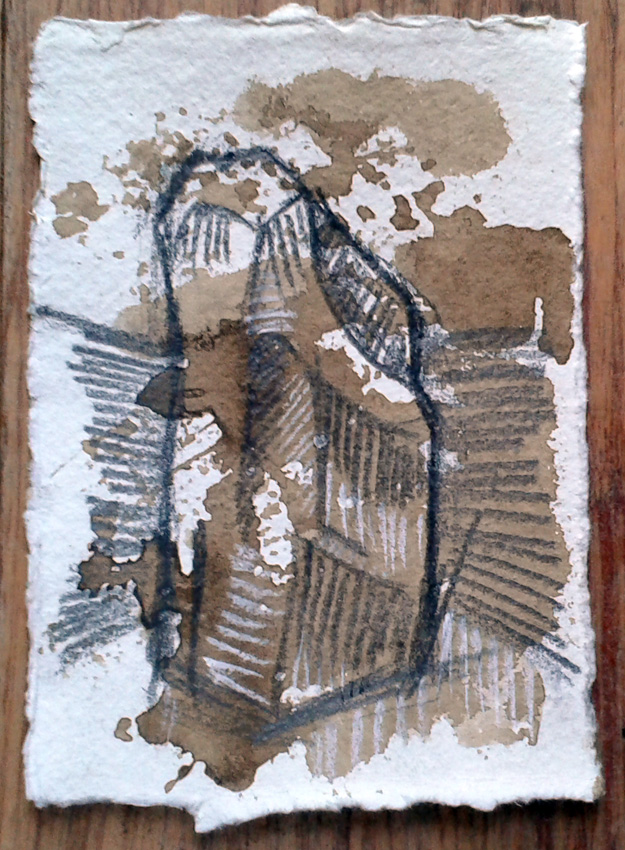
Out drawing megaliths last week and the last Neolithic stone of the day is another in an urban setting, ‘Carreg Hir’ (Long Stone) also called the ‘Penrhiwtyn’ stone in the playground of Cwrt Sart comprehensive school in Briton Ferry, Neath. It’s a magnificent menhir, over 9 feet tall but it has a controversial history with one story that it has always been there, another that it was originally on a mound overlooking the River Neath. The Welsh word Penrhiwtyn can be broken down  …. Pen means the top of, Rhiw means hill, I don’t know what Tyn means. But does ‘top of the hill’ indicate that the stone has been moved? The site is uphill anyway, but not at the top of the hill.

There’s also a legend that a tunnel runs beneath the stone to Neath Abbey about a mile away. It’s also aligned with the Abbey. And then there’s the legend that there is a charm, as yet undiscovered, that will compel the stone to speak and reveal its history, but once spoken, it will fall silent for eternity.

Cwrt Sart school 2

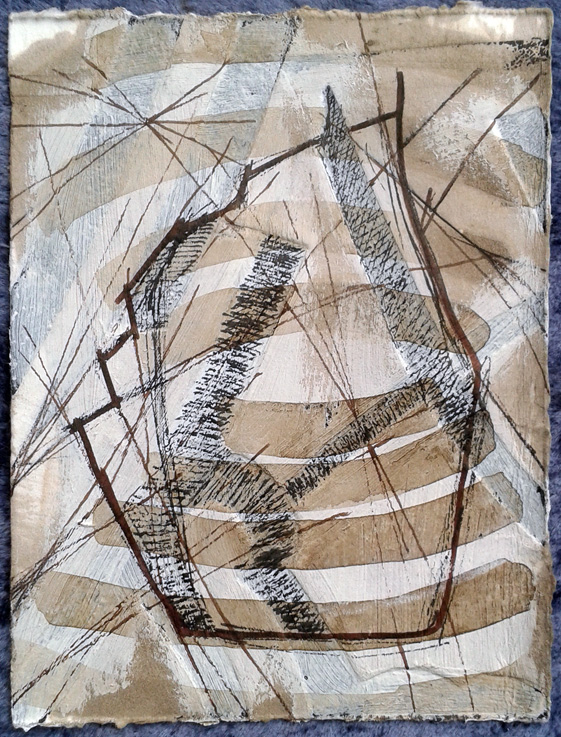
The staff at the school were lovely and welcomed us, readily giving permission to visit the stone. I used carbon, white conte crayon and Daler Rowney soft pastels in ochre and sepia, overlaid onto Fabriano paper prepared with my own walnut ink. The stone is completely surrounded by built environment and I didn’t want to focus on the buildings and do a representational drawing of them, so I matched their colours with my pastels and represented them with horizontal and diagonal lines behind the stone. Despite the concrete and brick, the stone itself has plenty of lichen growing on it, a welcome glimpse of living nature in amongst all the buildings.

I’m travelling around South West Wales with archaeologist Dewi Bowen who is researching his new book on Neolithic / Bronze Age monuments. His previous book on the stones of Ancient Siluria (South East Wales) can be found here. Accompanying us is film maker Melvyn Williams who is recording a documentary about our experiences. Some of Melvyn’s short films can be seen here. I’m currently working on a series of expressive drawings of ancestral sites and if you want to see some of my other artworks, please click here.
 

The Living Stones

Tyn Cellar

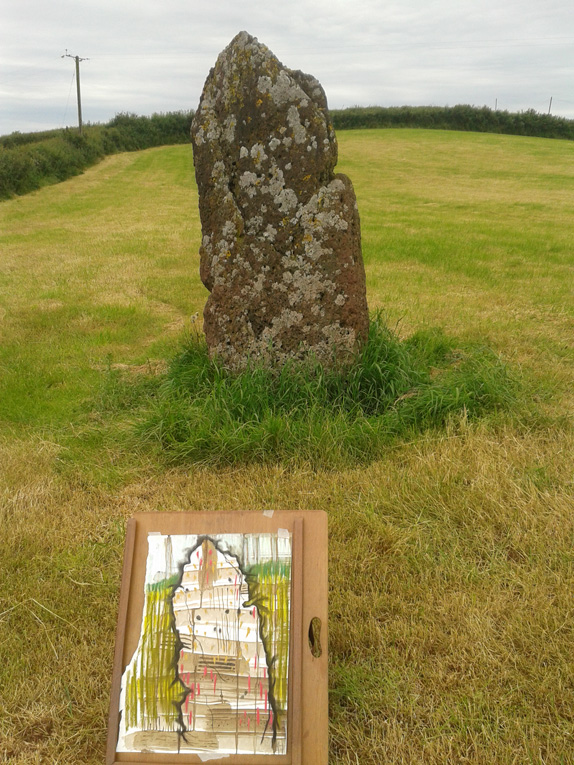
We managed to get to 4 ancient stones earlier this week and this one, Ty’n y Selar, is near Margam, in a field right next to the M4 motorway. It’s a fine large menhir, around 8 feet tall, but the sound of the traffic really intruded into the atmosphere of the place, disrupting the peace. A legend says that Saint Samson threw it into the field from Margam Hill; one of the locals we met told us of a legend that the stone regularly walks to take a drink at the local pub! I also read that the stone walks to the sea to drink each Christmas morning before the cock crows. There have been several other stones on my journey with Dewi and Melvyn that are supposed to be able to walk to take a drink.

One thing I’ve noticed about the stones as I’ve been travelling across South Wales is that they are rarely cold to the touch, they’re a comfortable temperature and most are covered with extensive colonies of lichens. I place my hand on each stone I visit, but carefully as lichen can be many years old and I don’t want to damage it. The temperature and the lichen give me an impression that the stones are somehow imbued with life, they are living stones.

I’m travelling around South West Wales with archaeologist Dewi Bowen who is researching his new book on Neolithic / Bronze Age monuments. His previous book on the stones of Ancient Siluria (South East Wales) can be found here. Accompanying us is film maker Melvyn Williams who is recording a documentary about our experiences. Some of Melvyn’s short films can be seen here. I’m currently working on a series of expressive drawings of ancestral sites and if you want to see some of my other artworks, please click here.
The Base Of The Stone

Bonymaen 1


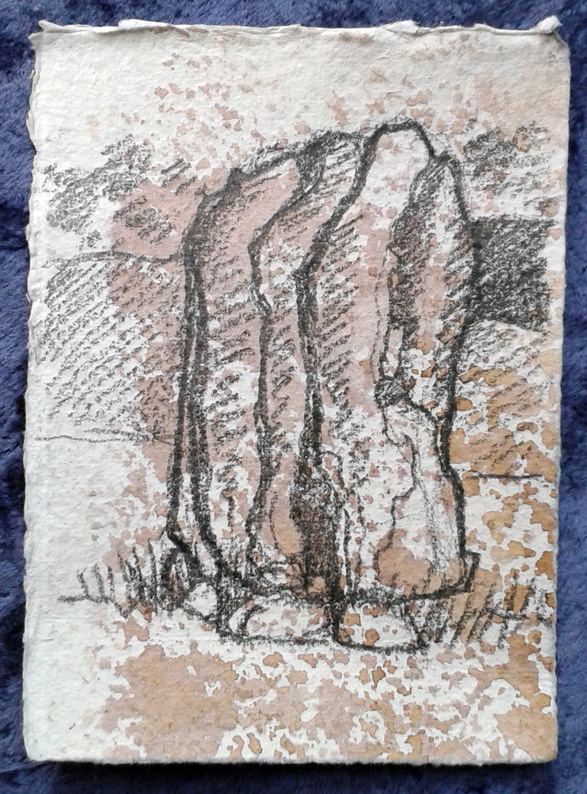
The second stone I drew on this week’s journey to explore the standing stones of South Wales is just three or so miles from where I live and I had no idea it existed. It’s in an area of Swansea called Bon-y-Maen and it never occurred to me to translate the name – it’s ‘The Base Of The Stone‘! And here it is, on the green in front of the local pub. The original village, later subsumed into the city limits, seems to have been built around the stone. It’s Bronze Age, possibly 4,000 years or so old. There’s a legend that the same stone ends in the village of Penmaen on the Gower Peninsula; Penmaen is Welsh for ‘Head Of The Stone‘.


Bonymaen 2

Many of the local stones are sedimentary and if you look closely you can see that I have drawn the patterns made by the sediments flaking on top of the drawing in white. Once again I’ve used Fabriano paper prepared with my home-made walnut ink and then worked on top in carbon and white conte crayon. I’m regularly using a restricted palette of 3 Daler-Rowney soft pastels in a pale blue and two greens. I am continuing to move away from realism and trying to interpret my feelings of the stone, my experience of it, concentrating on mark-making with the different media.

I’m travelling around South West Wales with archaeologist Dewi Bowen who is researching his new book on Neolithic / Bronze Age monuments. His previous book on the stones of Ancient Siluria (South East Wales) can be found here. Accompanying us is film maker Melvyn Williams who is recording a documentary about our experiences. Some of Melvyn’s short films can be seen here. I’m currently working on a series of expressive drawings of ancestral sites and if you want to see some of my other artworks, please click here.

Stone In A School

Cockett Valley stone

After the rain lifted this morning I was out with archaeologist Dewi Bowen and film maker Melvyn Williams, hunting Welsh megaliths. We stayed close to home and started out by visiting the local Dylan Thomas comprehensive school, where there is a fine Bronze Age standing stone, the Cockett Valley stone, at the far end of the playing fields. It wasn’t discovered until the end of the 1970s, when the land was being cleared for the playing fields and the stone was found under many generations growth of brambles. Staff at the school kindly provided cups of coffee before showing us to the stone. This particular monument is featured in Dewi’s first book, “Ancient Siluria, Its Stones And Ceremonial Sites” published by Llanerch Press (here).

I drew with carbon, white conte crayon and Daler Rowney soft oil pastels onto Fabriano paper that I had prepared in advance with my own home-made walnut ink. If you want to see some of my other artworks, please click here.

Going Solo

They like my drawing? No, they're after my apples
They like my drawing? No, they’re after my apples

Exciting but scary news. I’ve been offered a solo show based on the work I’m doing on Bronze Age and Neolithic ancestral stones in South Wales. I’ve never done a solo show before, always been part of group shows but this body of work is coming along very quickly and I am already planning to diversify into printmaking, with woodcuts, monotypes and etchings in the pipeline.

This slideshow requires JavaScript.

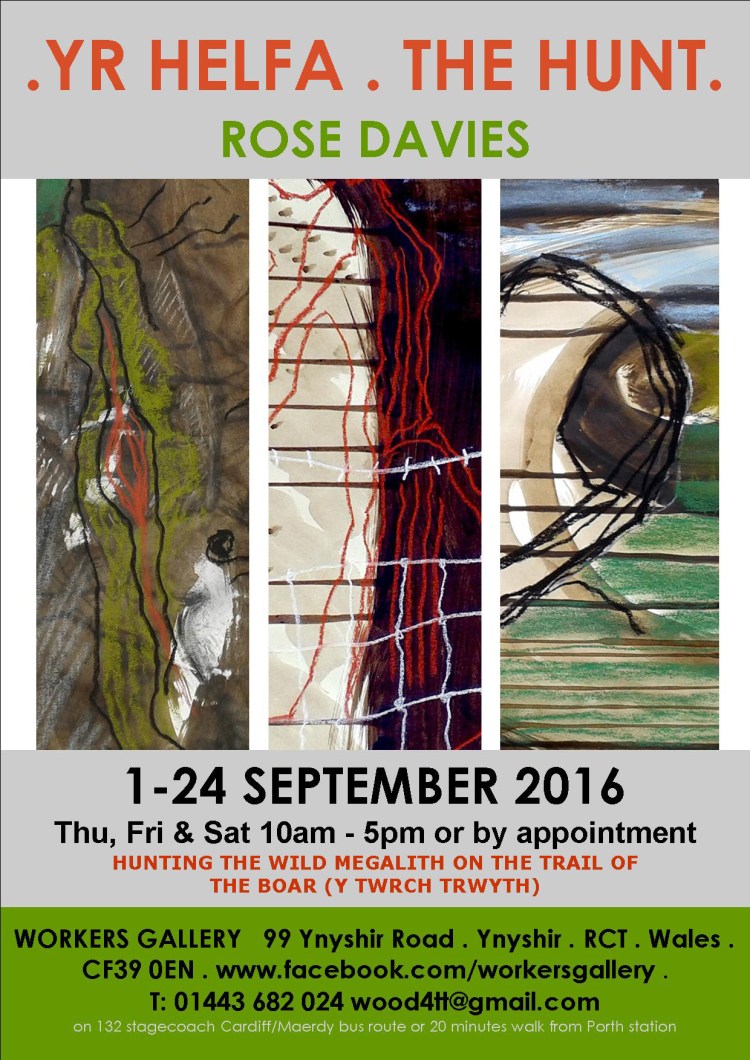
It will be at the most excellent Workers Gallery in Ynyshir in the Rhondda Valley, a gorgeous gallery and workshop space set up just over a year ago by artists Gayle Rogers and Chris Williams.

The exhibition will run from September 1st to 24th and will include opening and closing events, artist talks and workshops in drawing and printmaking techniques.

The Workers Gallery
The Workers Gallery

Don’t Panic!!!!!

Massed Stones


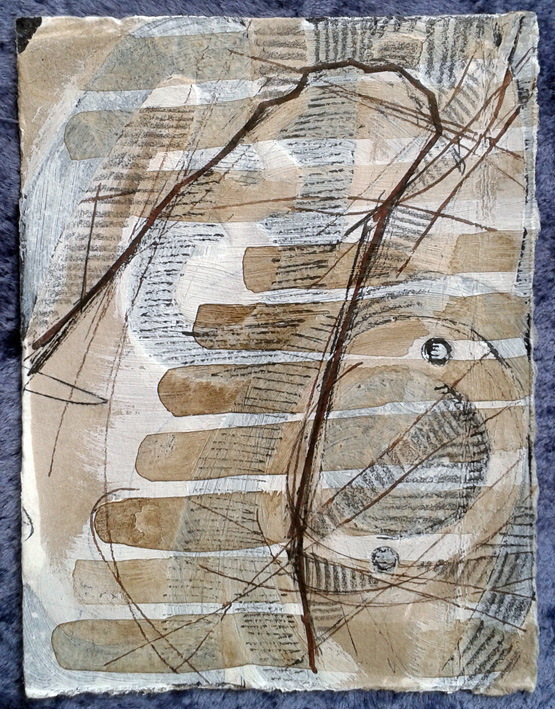
Here’s the recent drawing output from the last 4 days drawing ancient ancestral stone monuments across South Wales, through Carmarthenshire, Pembrokeshire and Powys. These stones are sited along the route of Y Twrch Trwyth, The Boar’s Trail, a story from the Mabinogion, the collected myths and legends of Wales.


I’m travelling around South West Wales with archaeologist Dewi Bowen who is researching his new book on Neolithic / Bronze Age monuments. His previous book on the stones of Ancient Siluria (South East Wales) can be found here. Accompanying us is film maker Melvyn Williams who is recording a documentary about our experiences. Some of Melvyn’s short films can be seen here. I’m currently working on a series of expressive drawings of ancestral sites and if you want to see some of my other artworks, please click here.

Ethereal, Insubstantial.

The third stone at Llechdwnni

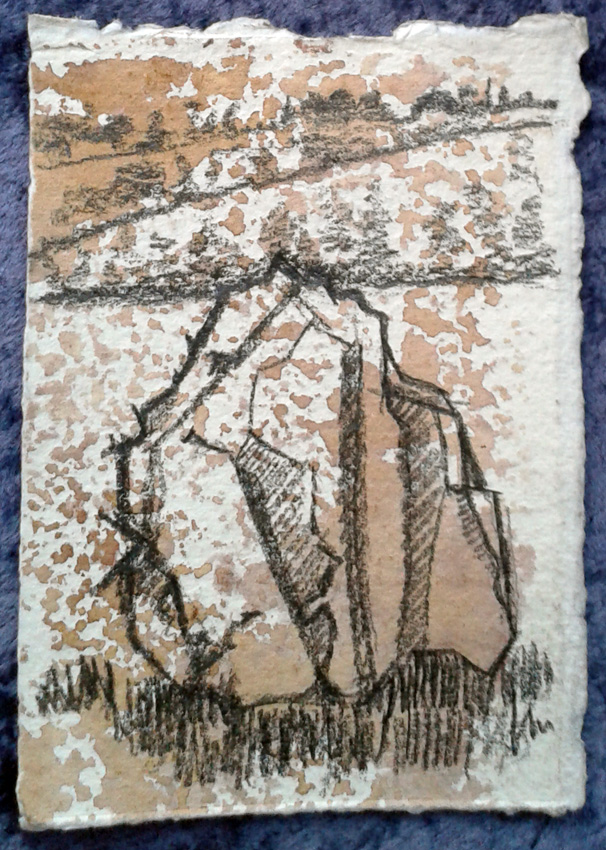
This is the latest of the series of drawings done en plein air out in the wilds of West Wales, the smallest of three fine stones on farmland near Llechdwnni Farm on the mountain between Ferryside and Pontyberem. I worked on top of some Fabriano Accademica paper that I had prepared with my own home-made walnut ink, diluted into several washes of different intensity. When I’m using prepared paper, I don’t decide which piece to use until I’m looking at what I’m going to draw, then I choose the one that I feel best suits the subject. The drawings are evolving, becoming more insubstantial, which seems odd given that they are massive stones, but their purpose and history are unknown and that, to me, is what makes them ethereal. I used carbon for the intense black, white conte crayon and three Daler Rowney artist pastels in a light blue and two shades of green.

The Third Stone

Llechdwnni 2

This is the third standing stone in the Llechdwnni group. It is positioned opposite the pair I posted yesterday and the archaeologist I’m journeying with, Dewi Bowen, thinks that the three stones might have been planned as a circle originally and either were not completed or the rest have disappeared over the millennia.

Dewi Bowen's first book
Dewi Bowen’s first book

I’m travelling around South West Wales with archaeologist Dewi Bowen who is researching his new book on Neolithic / Bronze Age monuments. His previous book on the stones of Ancient Siluria (South East Wales) can be found here. Accompanying us is film maker Melvyn Williams who is recording a documentary about our experiences. Some of Melvyn’s short films can be seen here. I’m currently working on a series of expressive drawings of ancestral sites and if you want to see some of my other artworks, please click here.
 

Wild Walking

2 of the Llechdwnni standing stones

My latest day in West Wales drawing ancestral stones was the seventh so far. The time has gone by so quickly, we started in February, archaeologist Dewi Bowen, film maker Melvyn Williams and myself. The weather isn’t good now but two months ago it was brutal and the ground was sodden after months of almost ceaseless rain. On top of that, some of us were getting over Winter illnesses and although medical advice was positive about our wild walking, I found it alarming sometimes that we were far from civilisation with no phone signal. But the experience seems to be making us all fitter as we’re edging out of Winter and into Spring. Many of the stones are miles from anywhere, down roads that are not even on most maps, places that SatNav doesn’t seem to have heard of. It’s exciting discovering my country as well as my heritage. These are two of the three standing stones of Llechdwnni, near Llandyfaelog in Carmarthenshire.

Here’s a short video of me up the mountain trying to draw in the wind with a very curious Welsh pony.

Paper, Pony, En Plein Air

I’ve been travelling around the wild spaces of South Wales over the last seven weeks with archaeologist Dewi Bowen and film maker Melvyn Williams on Y Twrch Trwyth, The Boar’s Trail from the Mabinogion, the book of ancient Welsh legends. Melvyn is filming as Dewi researches the ancient stones for his new book and I’m drawing them. Melvyn has started to edit together some little snippets of his footage as a video diary of our journeying. This short video shows how I’m preparing my paper for drawing en plein air and also has some footage of me getting to grips with drawing in a high wind up a mountain with a pony determined to get my lunch box.

dewi melvyn

Here’s Melvyn on the left and Dewi at the Llechdwnni standing stones near Llandyfaelog, Carmarthenshire, in a muddy field.