The next printmaking event at Swansea Print Workshop – please pop by if you’re in the area 😀
Source: PINK CHAI AND WELSH CAKES
The next printmaking event at Swansea Print Workshop – please pop by if you’re in the area 😀
Source: PINK CHAI AND WELSH CAKES
A beautiful original painting by Glenys Cour, a fundraiser for Swansea Print Workshop
Source: Win a Glenys Cour painting …
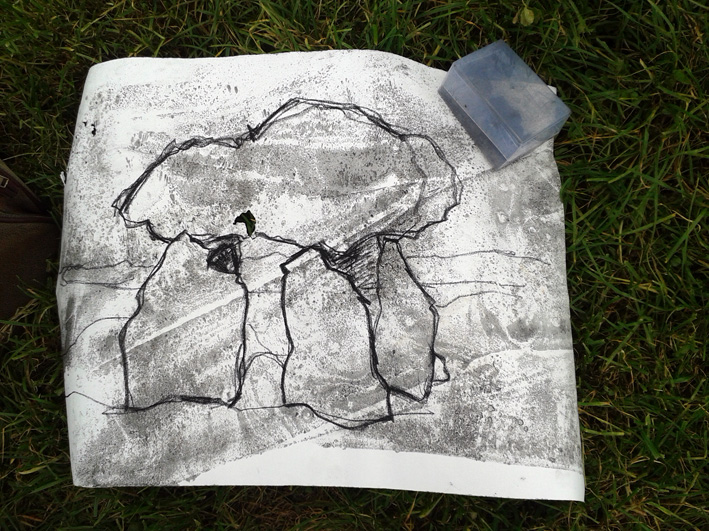
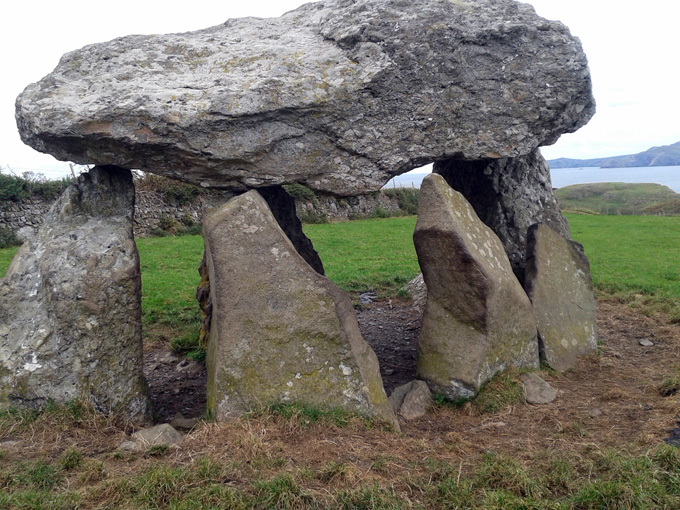
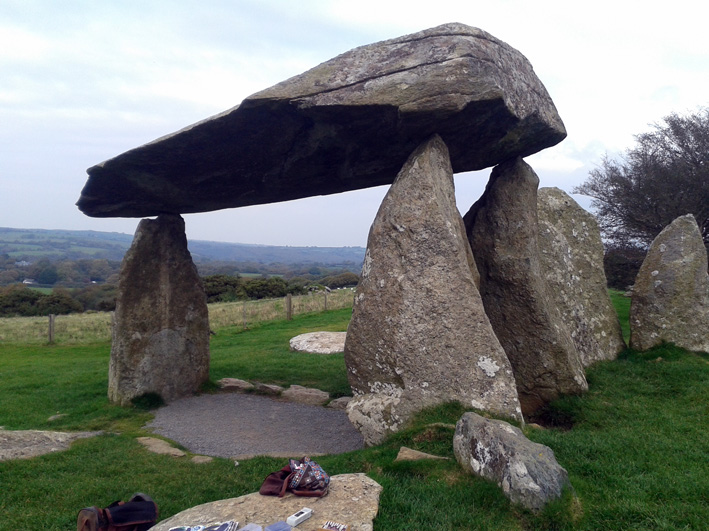
Here’s the fourth ancient burial site I drew over the weekend on my visit to ancestral graves in North Pembrokeshire. It’s a beautiful little chambered tomb called Carreg Samson, near Abercastle. The dolmen looks out across The Irish Sea from a farmer’s clifftop field in a glorious setting. It’s around 5,000 years old and is the site of over 1,000 burials and more recently a shelter for sheep.
I forgot to take a drawing board with me so I scrabbled around on my hands and knees, drawing on the grass. I drew very quickly because it was cold, blustery and uncomfortable. I drew with a piece of Daler Rowney carbon onto a piece of Fabriano Accademica paper (200 gsm) that I had marbled with oil paint mixed with English Turpentine. I like the effect that the marbling gives to these Neolithic stones.
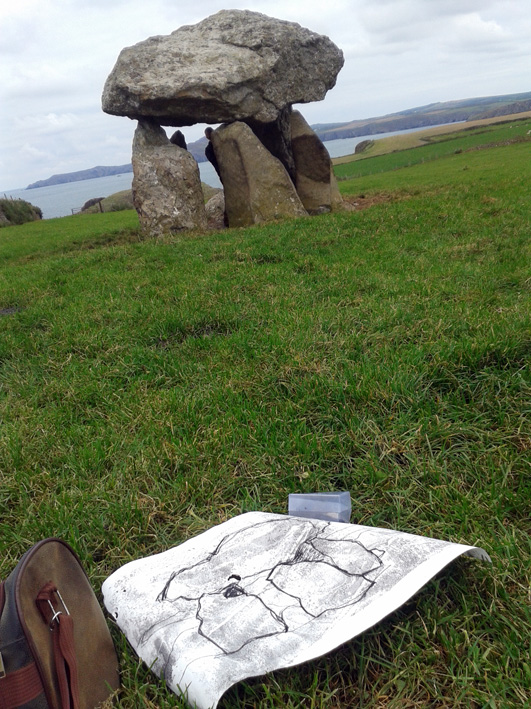
When I got up off my knees, I realised that the field had been recently occupied by cattle. The evidence was on my leggings. I suffer for my art 😡
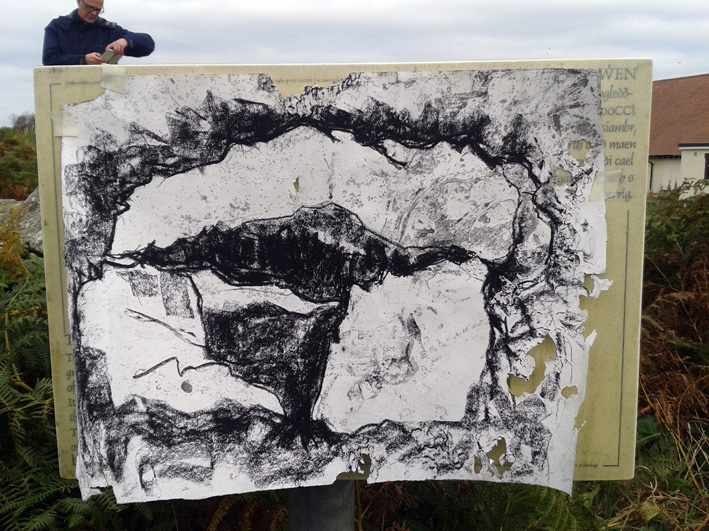
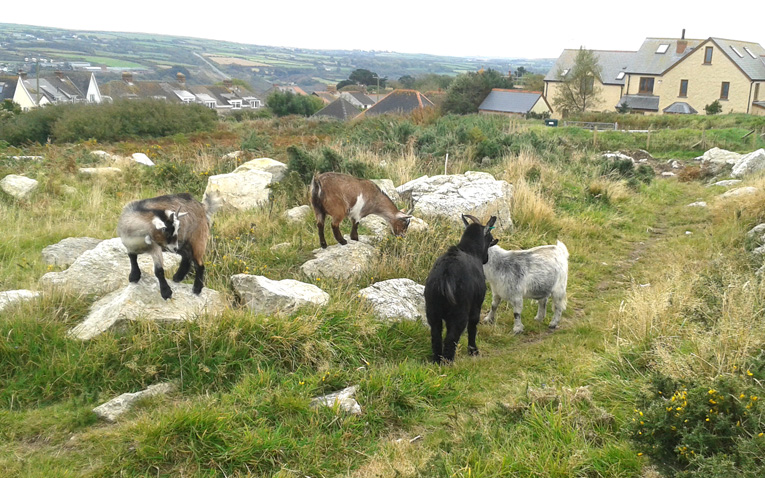
Trekking around North Pembrokeshire yesterday, hunting ancient burial sites, took us to Goodwick near Fishguard (what are the fish guarding?) and a bit of a trek along the cliff path towards Strumble Head, through a housing estate and along an overgrown path between back gardens and a barbed wire fence keeping goats at bay to the three prehistoric chambered tombs known as the Garn Wen burial chambers. They’re quite different to the other sites we visited, they are very low, the uprights mostly submerged and the capstones barely above ground. They’re hardly visible amongst the bracken. The other sites are beautifully manicured but this one has been left largely unvisited, going by the state of the hardly used, overgrown path.
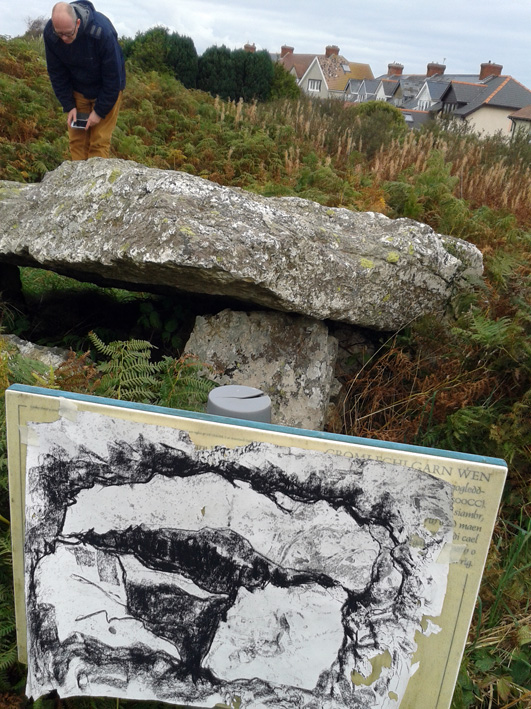
I’d forgotten to take along a drawing board but there was a conveniently placed notice board on the small site so I taped a piece of marbled Fabriano Accademica to it and drew quickly with a piece of carbon. We were up above the cliff and the wind was gusting, very chilly for drawing. When I marbled the paper some months ago, I used black oil paint mixed with a little turpentine. It was very smelly so I put it into the garden to dry, forgot about it and found the paper next day covered in holes nibbled by snails. I like the effect of the rough drawing of the rough cromlech on the rough paper.
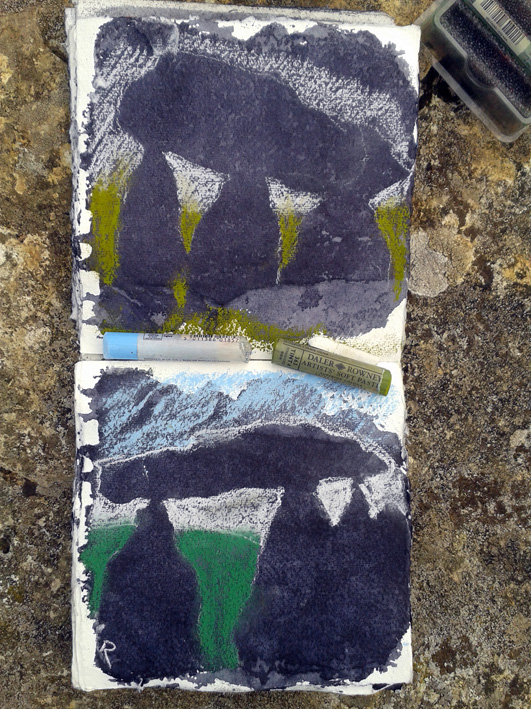
I spend a couple of days in Pembrokeshire drawing dolmens. I managed to get to 4 sites and did some sketching in the field, not easy as I forgot to take my drawing board so I was drawing on grass or even the stones themselves. I tried out some different techniques. These first two drawings at Pentre Ifan are drawn into my small Khadi handmade paper sketchbook that I had pre-coloured with a dark ink wash sploshed on randomly with a sponge. I drew with my Daler Rowney artist’s oil pastels, using white, pale blue and two tones of green. I filled in the negative spaces with the pastels – the dark stones are the ink-washed paper.
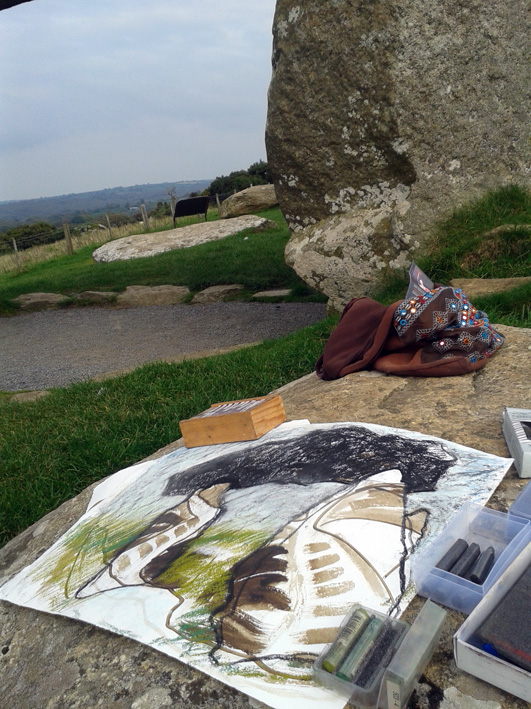
Then I tried experimenting with a piece of Fabriano Accademica paper that I had already drawn on some months ago. I visited St. Paul’s catacombs in Malta last Winter and when I came back, I developed some of my sketches into larger drawings with my home-made walnut ink. I didn’t much care for most of them and I’ve been planning on re-using them and this is my first attempt, drawn with carbon and oil pastels, both by Daler Rowney. I like the idea of overlaying an ancient burial chamber onto an ancient burial site, but I’m not sure what I think of the drawing itself. I’ll sleep on it.
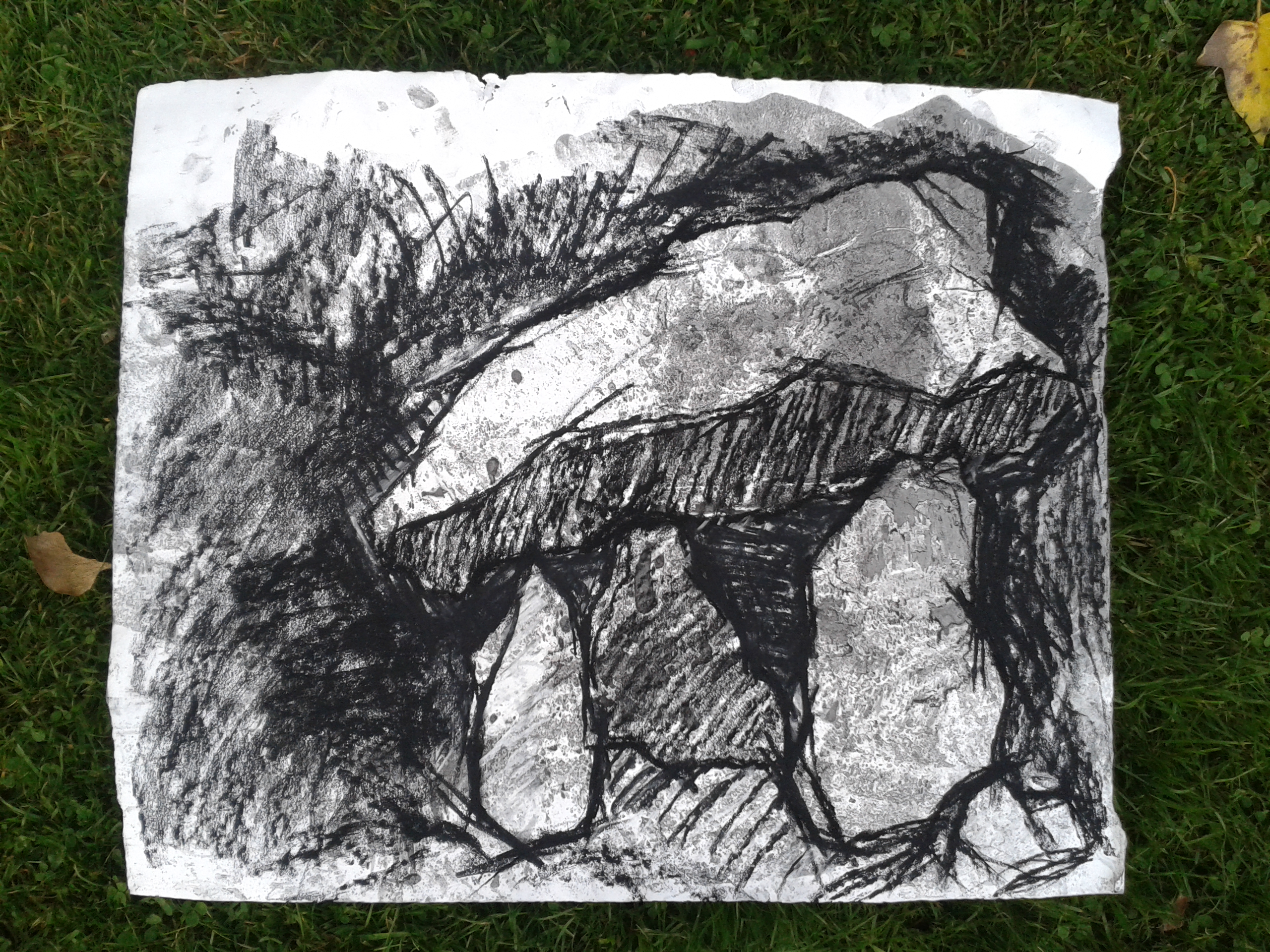
I’m drawing dolmen in Pembrokeshire. I used compressed charcoal onto marbled Fabriano paper.

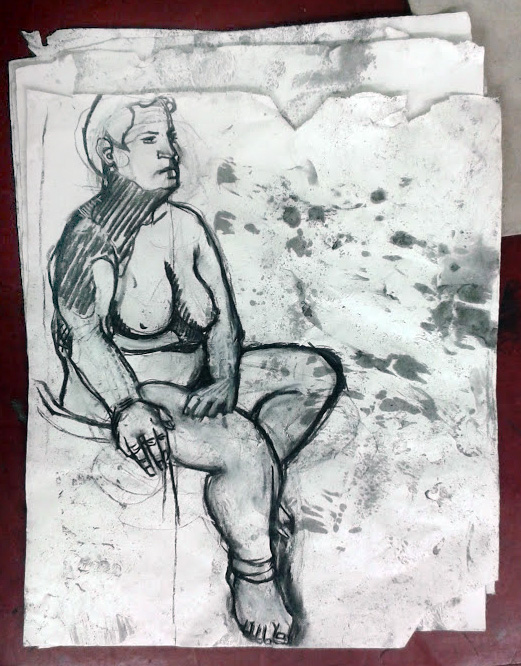
Tonight’s life drawing is like the Curate’s egg – good in parts. I had the most horrific foreshortening on the left hand. no matter how many times I measured it, the darn thing looked badly drawn. I used Winsor & Newton’s willow charcoal and white conte crayon onto a piece of Fabriano Accademica that I had marbled with oil paint and turpentine.
It’s late. I’m going to bed. Goodnight 😀
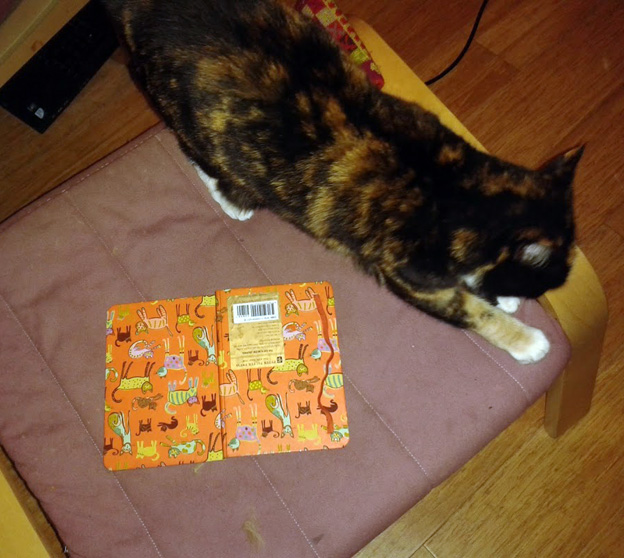
I started a new sketchbook earlier this week, a Peter Pauper Press book called ‘The Cat’s Meow Journal’. That’s Sparta Puss ‘helping’ me to photograph it. Not!

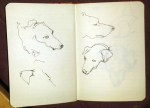

The first scribbles are of the two little Patterdale Terriers belonging to Jane Simpson of Galerie Simpson in Swansea. I popped in a couple of days ago and just had to draw them. I used a biro.
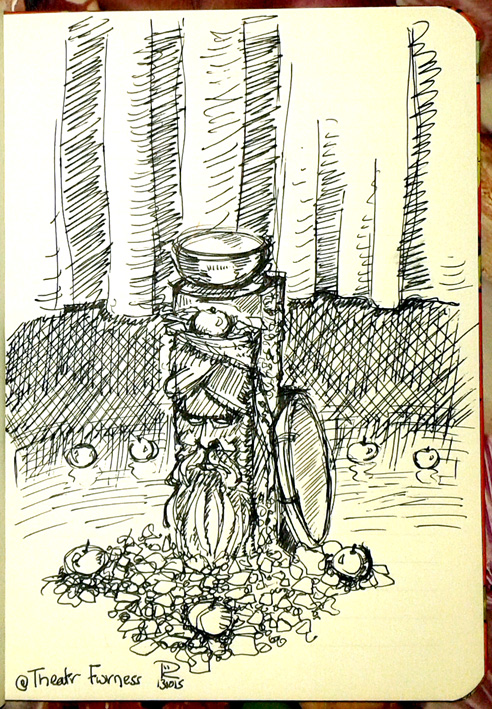
Husb and I went to Llanelli this evening, to the newish Theatr Fwrness to see a performance of Autumn Fires by local storytellers Carl Gough, David Pitt and Eleanor Shaw. “As we descend into the darkness of winter we gather by the fire, yet that flame which ensures our survival still reduces us to ash in the pyre, a selection of traditional tales that will carry you to the very heart of the Autumn Fire.”
At the centre of the stage area was a beautiful Green Man carved from a piece of tree trunk, surrounded by tree bark and large harvest apples. A singing bowl sat on top of it and rang out during the intense and evocative performance. Thoroughly enjoyed it, but the bottle of Dandelion & Burdock I had during the interval has quite gone to my head 😉
I used a biro pen into my new Cat’s Meow Journal from Peter Pauper Press.
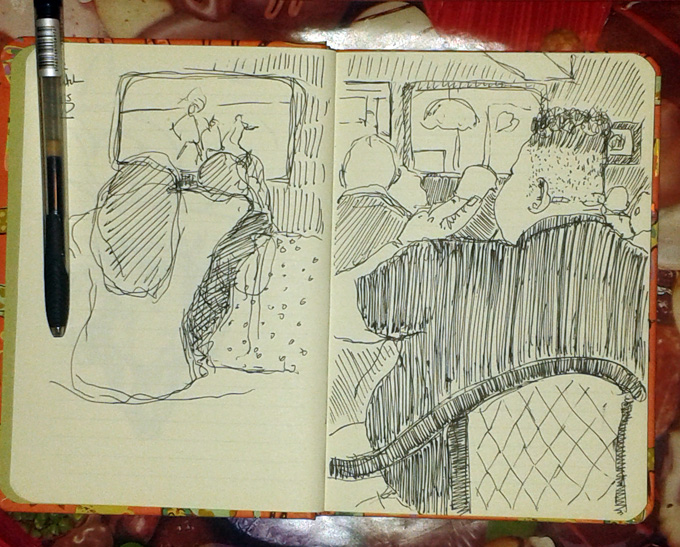
The rugby World Cup has been thrilling so far and after Saturday’s epic woodcut session at Swansea Print Workshop, a few of us decamped to local hostelry, The Brunswick, to watch the match between Wales and Australia. It was a tough game, we lost but we’re still going through to the next round. Exciting stuff. Here are some of the other rugby fans watching at the old pub, which is renowned for it’s excellent selection of real ales. I used a ballpoint pen into my new little ‘Cat’s Meow Journal’ by Peter Pauper Press, a lovely present last Xmas. It was nice to get back to a bit of spontaneous sketching, I hadn’t done any for ages.

