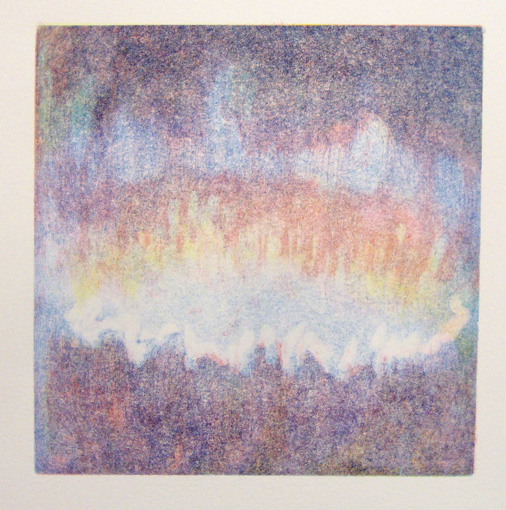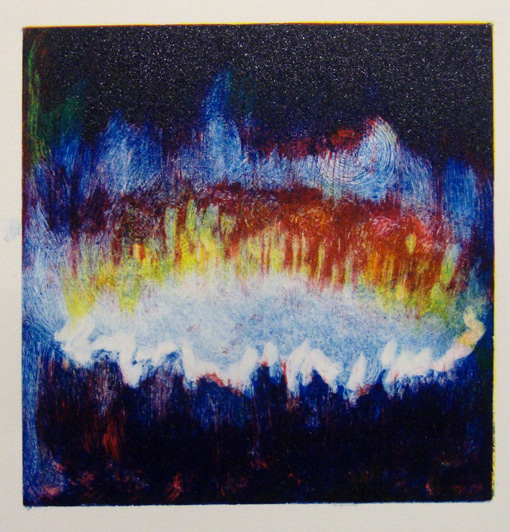
Here’s the ‘ghost’ of the monotype I completed yesterday. It’s made by putting a second piece of paper on the plate and putting it through the press again to pick up what’s left of the ink. The ethereal image is very impressionistic, almost pointillist as the pigment fragments on the second pressing. I used Caligo oil based washable litho / relief inks in Process Yellow, Magenta and Cyan plus Extender onto BFK Rives 250gsm paper. It’s a gorgeous one with a deckle edge, very fine, smooth surface. It’s the best for this technique.
Thunder And Rodents
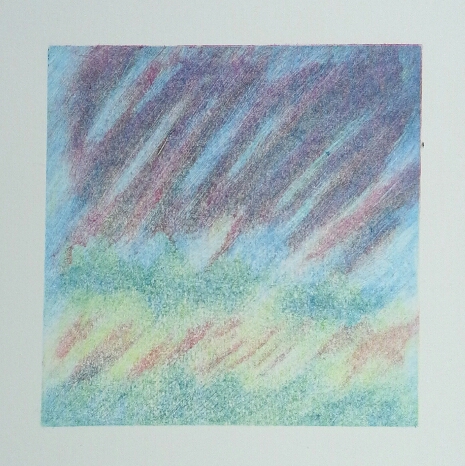
Just back from an evening Open Access session at Swansea Print Workshop where I did the third in a series of impressionistic monotype landscapes based on the residency I did in Pakistan earlier this year. This is one of a sequence I drew in a thunderstorm.
Had a tough day. Sparta Puss the evil-kitty-from-hell, terrorised me by bringing a live rodent into the house. It was a relief to get away to do some printmaking. And now I’m tired.
What Am I Up To?
Here’s what I’ll be getting up to in October. As well as blogging, of course 😀
A lovely blog reposted ‘The Simple History of Mario’
This is a truly lovely blog, very inspiring
Slate Cliffs And Bara Brith
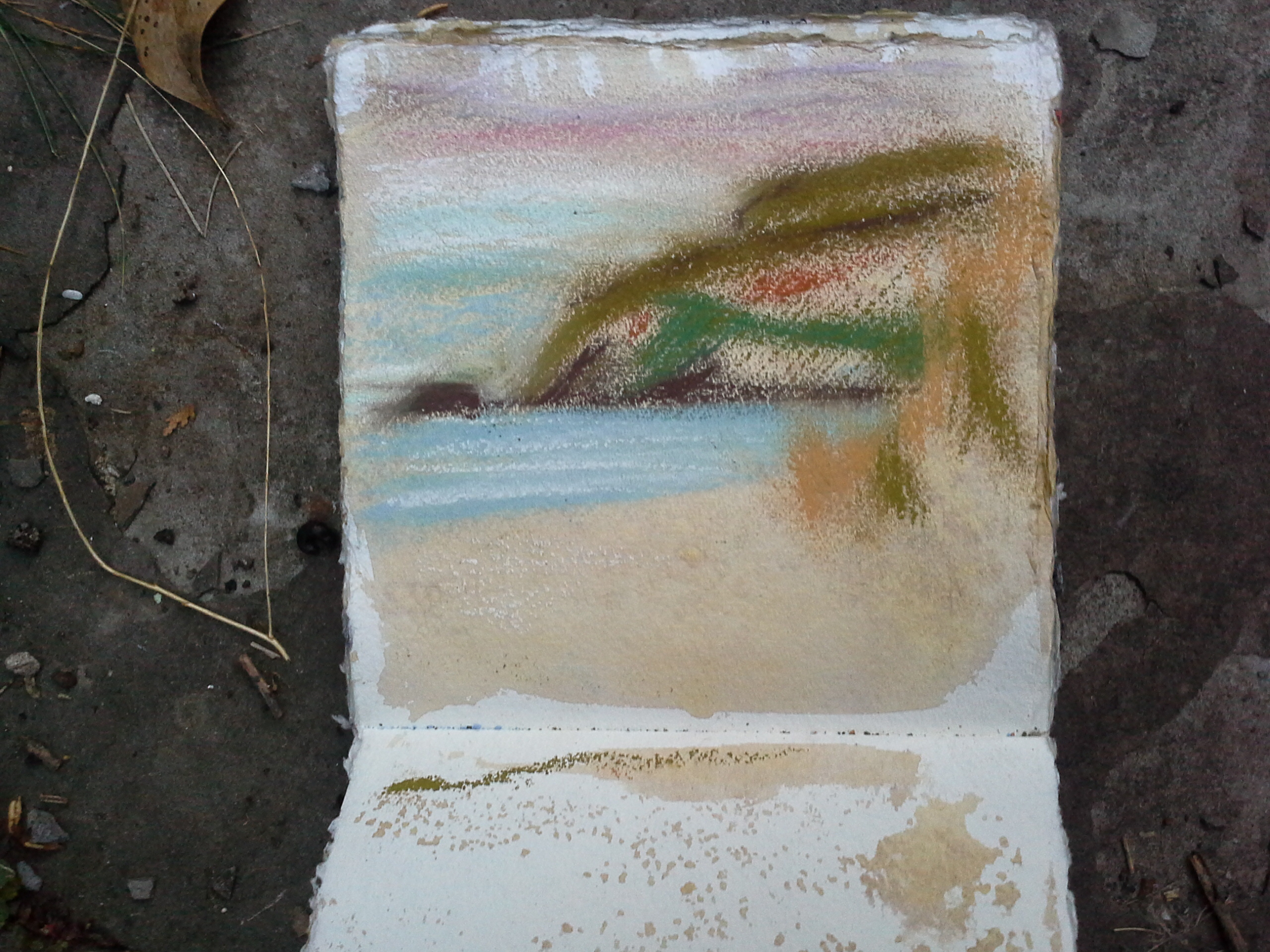
Husb and I spent yesterday walking with friends along Newport beach on the North Pembrokeshire coast. Apart from the exceptional beauty of the place, it’s notable for the variety of wild birds along the estuary and the rugged vertical slate cliffs. I stood with my back to the slate cliff and quickly sketched the headland and the beach in front of me. I used Daler Rowney soft pastels into a small Khadi handmade paper sketchbook.
Afterwards, back at our friends’, we sipped tea, nibbled on home made bara brith and browsed through some books on Kyffin Williams’ landscape drawings. Inspirational.
The Dead Rabbit Mystery
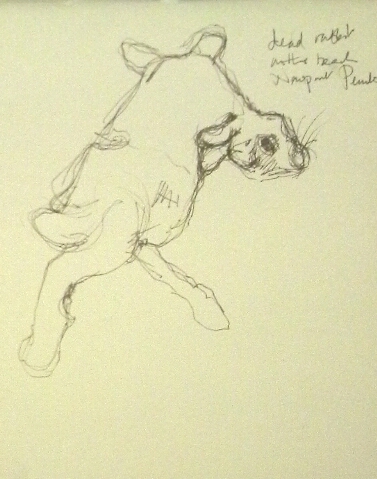
Husb and I visited friends in north Pembrokeshire this afternoon and went for a long walk along the estuary and beach at Newport. I was surprised to find this broken corpse of a wild rabbit on the sand. It was a sad sight and I looked away at first but then decided to sketch it. The body wasn’t marked or torn in any way, although its eye sockets had been picked clean. We wondered how it had got there. A fox or dog maybe? But it hadn’t been gnawed or worried. Dropped by a bird of prey? It wasn’t a baby rabbit, but not fully grown either, so that’s a possibility. We’ll never know.
I drew into my leather-bound Steampunk sketchbook with a Faber Castell Pitt drawing pen, size S. It took about 3 or 4 minutes. It seems a bit gruesome drawing a rabbit corpse, but there’s a tradition of painting dead animals in Northern European art.
A Body In Space
A Late Head
And Now, The Ghost
Following on from yesterday’s post about my latest reduction monotype, this is the ‘ghost’ image that is formed by putting a second piece of paper through the press after the first image is taken off the perspex plate. This gives a paler, ethereal monotype, where the pigment has broken up into little grains, rather like an Impressionist painting. Some French Impressionist artists, notably Degas and Monet, were said to have used this technique and worked into their ghost monotypes with oil pastels. I’ve tried this and it works really well, but you need to use best quality artist’s soft pastels; cheaper, chalky ones don’t work and they fade. The original was an impressionistic landscape drawing I did during a visit to Pakistan earlier this year.
Stacking
Spent a happy few hours at Swansea Print Workshop this evening, making another small monotype based on one of my pastel landscape drawings from the residency I did in Pakistan earlier this year. I did a series of 49 small drawings very quickly, so they are very impressionistic. This is based on one of the drawings done during a thunderstorm. This monotype technique is called stacking or reduction monotype and it produces a full-colour unique print. It’s where painting and printmaking cross over.
Working from a black and white copy of the original drawing underneath a perspex plate, it’s first inked up in process yellow and drawn into with all sorts of equipment; cotton buds, scrim, cocktail sticks, kebab skewers, stiff paint brushes; then a print is taken. This is repeated with the plate inked up in process red and placed on top of the yellow print and put through the press. Finally, the same is done with the perspex inked up with process blue and the last print taken – the three are stacked on top of each other. You can read more about it in the technical section of my website here.
I’m moderately pleased with this one, but I need to practice my brush techniques because the colours are a bit too bright for my liking. I intend to carry on doing these for quite a while, so I’m hoping I’ll improve.