The Liminal Place

iron age

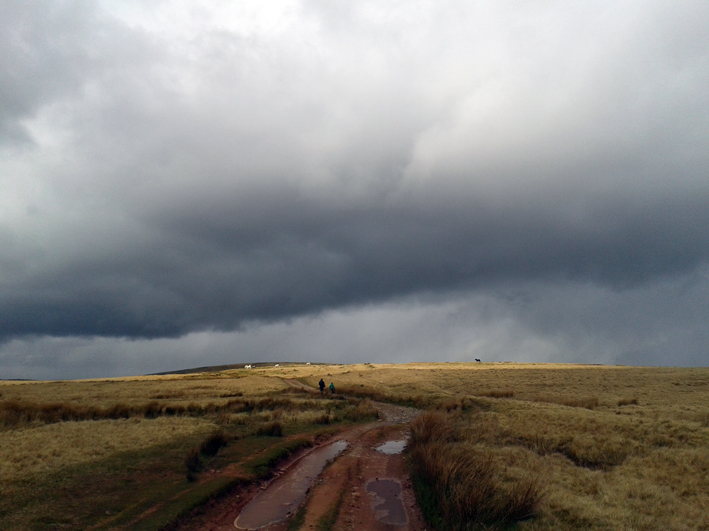
Out and about visiting ancient sites in and around the Rhondda Valley, we stopped on the way from Hirwaun to Treherbert to look around the Hendre’r Mynydd Iron Age settlement. It’s a bit more modern than the ones we’ve been visiting, probably less than 3000 years old. My travelling companion, archaeologist Dewi Bowen, described it as a ‘liminal’ place, at the boundary of two different environments, teetering on the very edge of an upland clearing with an immense drop into the valley below.

iron age 2

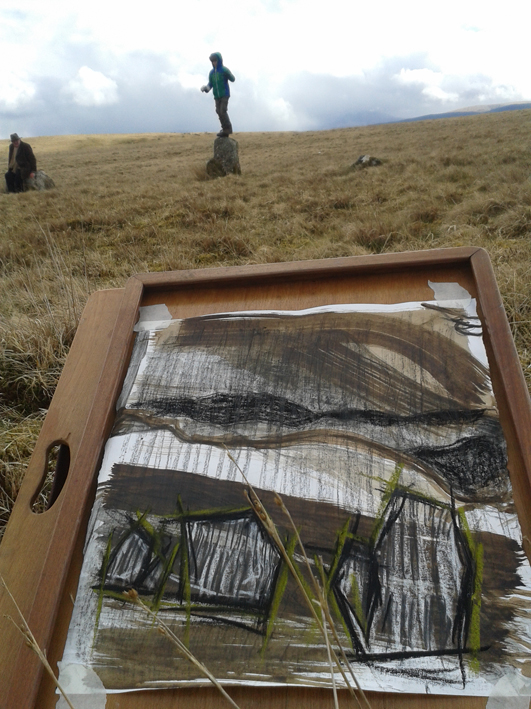
Now there are two things I don’t normally do, landscapes and abstracts and here I have drawn an abstract landscape! The settlement is made up of low-lying rock walls forming circles and swirls in the rough grass; there’s no single significant thing to draw such as a standing stone or a tomb so how to approach a subject like this? I’m not interested in doing a topographical drawing, or realism, I want to tap into something deeper that means more to me and this is what I ended up with. I drew an outline of the rock formations as they lay across the site in white conte crayon across a piece of Fabriano Accademica paper that I had prepared with walnut ink, sponged on to achieve a light background wash and then dribbled with the original full-strength ink.

I’m travelling around South West Wales with archaeologist Dewi Bowen who is researching his new book on Neolithic / Bronze Age monuments. His previous book on the standing stones of Ancient Siluria (South East Wales) can be found here. Accompanying us is film maker Melvyn Williams who is recording a documentary about the our experiences. Some of Melvyn’s short films can be seen here. I’m working on a series of expressive drawings of ancestral sites and if you want to see some of my other artworks, please click here.

Rocking!

Rocking

Carrying on with our search for ancient monuments, we came across this famous one on the hillside above Pontypridd. It’s The Rocking Stone, or Y Garreg Siglo in Welsh. This seems to be two massive stones laid one on top of the other, probably a glacial erratic placed by a glacier in the last Ice Age.  but certainly done by nature, not by people. It attracted the attention of poet and bard Iolo Morgannwg, who held the second modern Eisteddfod there in 1795.  The stone circle, The Gorsedd, was erected around it some time later by the bard Myfyr Morgannwg.

Rocking 2
Film maker Melvyn Williams and a archaeologist Dewi Bowen rocking on the stone

I’m travelling around South West Wales with archaeologist Dewi Bowen who is researching his new book on Neolithic / Bronze Age monuments. His previous book on the standing stones of Ancient Siluria (South East Wales) can be found here. Accompanying us is film maker Melvyn Williams who is recording a documentary about the our experiences. Some of Melvyn’s short films can be seen here. I’m working on a series of expressive drawings of ancestral sites and if you want to see some of my other artworks, please click here.


The Drinking Stone

Maen Llia

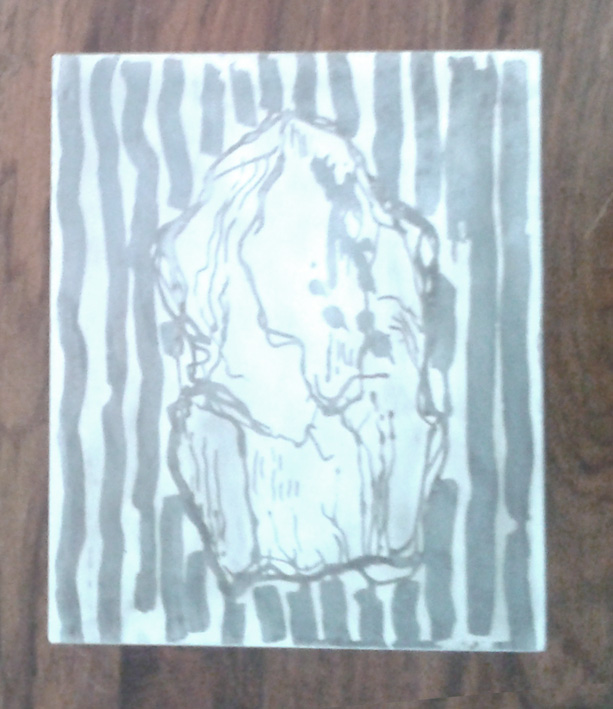
The spectacular Maen Llia standing stone near the village of Ystradfellte at the junction of two valleys, possibly a marker stone on an ancient trackway. It’s a huge diamond shaped conglomerate slab, probably from the Bronze Age and local legend says that the stone drinks from the nearby stream on Midsummer morning.

I drew onto a piece of paper prepared with some of my home-made walnut ink. I had dribbled it across the surface and the lines it made resonated with the scars across the landscape. I drew with carbon and then, for the first time in this series of drawings, put in some colour with oil pastels.

I’m travelling around South West Wales with archaeologist Dewi Bowen who is researching his new book on Neolithic / Bronze Age monuments. His previous book on the standing stones of Ancient Siluria (South East Wales) can be found here. Accompanying us is film maker Melvyn Williams who is recording a documentary about the our experiences. Some of Melvyn’s short films can be seen here. I’m working on a series of expressive drawings of ancestral sites and if you want to see some of my other artworks, please click here.
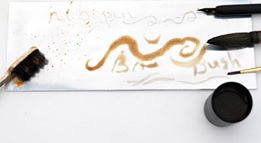
Walnut Husk Ink Revisited

I’ve updated this post about the time I made some walnut ink

Rosie Scribblah's avatarscribblah

UPDATE:

It’s been about a year since I wrote this post when I made a batch of walnut ink. I’ve been using it regularly and it’s delicious, silky, smooth and rich. It seems to be lightfast, no signs of fading on any of the pieces, although I’ve been careful to use best quality acid-free paper like Fabriano and Saunders.

20160306_145501

Here’s the most recent drawing, in carbon and white conte crayon overlaid onto a background of walnut ink.

DSC08063

So today I finally finished the walnut ink I started a couple of weeks ago. A friend gave me 4 fresh walnuts (juglans regia) in their husks. I peeled them and left the husks to stand in a basin of water for about a week and a half. They went very black and mushy. I put the basin, covered with tin foil,  into a slow cooker with hot water coming up to half…

View original post 144 more words

The Stoneless Ring

penlle bebyll
My very quick drawing with Dewi and Melvyn in the background

The final drawing from last Sunday’s trek around ancient ancestral sites took us up a mountain to the Pentre’r Bebyll ring cairn up above Pontarddulais. At 860 feet, the summit of Mynydd Pysgodlyn was really cold and I was already chilly from doing the two previous drawings at Bryn y Rhyd and Graig Fawr. This circular earthwork is about 60 feet in diameter but only a couple of feet high. It’s possible that there were once standing stones but now there’s just an earth bank remaining.

It’s difficult to draw something that is simultaneously so large (in diameter) and so small (in height) so I threw myself onto the freezing ground and focussed on the contours in front of me, drawing them boldly in carbon and white conte crayon across the paper that I’d previously prepared with home made walnut ink. It was a very quick drawing because I was cold, tired and fed up. Sketching on top of a previous drawing speeds up the process a lot and makes it unpredictable and spontaneous. I finished as I started, spattered with mud.

I’m travelling around South West Wales with archaeologist Dewi Bowen who is researching his new book on Neolithic / Bronze Age monuments. His previous book on the standing stones of Ancient Siluria (South East Wales) can be found here. Accompanying us is film maker Melvyn Williams who is recording a documentary about the our experiences. Some of Melvyn’s short films can be seen here. I’m working on a series of expressive drawings of ancestral sites and if you want to see some of my other artworks, please click here.


The Maenhir on Bryn Y Rhyd

Bryn y Rhyd 1

Another site of ancient significance, a large standing stone in isolated magnificence in a field, this is the Bryn-Y-Rhyd maenhir/menhir near the village of Llanedi in Carmarthenshire. Maenhir is Welsh for long stone and this is a pretty massive specimen, towering over Dewi and Melvyn. I drew with carbon and white conte crayon onto a piece of Fabriano Accademica that I had previously drawn on in home-made walnut ink. It gives a luscious silky surface and a range of sepia tones.

Bryn y Rhyd 2

I’m travelling around South West Wales with archaeologist Dewi Bowen who is researching his new book on Neolithic / Bronze Age monuments. His previous book on the standing stones of Ancient Siluria (South East Wales) can be found here. Accompanying us is film maker Melvyn Williams who is recording a documentary about the our experiences. Some of Melvyn’s short films can be seen here. I’m working on a series of expressive drawings of ancestral sites and if you want to see some of my other artworks, please click here.


Ponies And A Monstrous Cat

Graig Fawr

Out again today exploring ancient neolithic monuments in South West Wales, quite near to home this time. Our first stop was a fair hike up Graig Fawr (Big Rock) mountain near Pentrebach (Little Village) not far from Pontarddulais near Garreg Llwyd (Grey Rocks) farm in the County of Swansea. We walked in the freezing weather up to two small chambered tombs considered the most westerly of the Cotswold / Severn type tomb in Britain. The stones are not named so I’m going to call them Carreg Palug (Palug’s Stones) after a monstrous cat in Welsh mythology that terrorised warriors in Anglesey. Why not, eh?

We also met some gorgeous ponies up on the mountain. They were very curious, especially when they spotted my lunchbox!

I’m travelling around with archaeologist Dewi Bowen who is researching his new book. His previous book on the standing stones of Ancient Siluria (South East Wales) can be found here. Accompanying us is film maker Melvyn Williams who is recording a documentary about the process. Some of Melvyn’s short films can be seen here. If you want to see some more of my artworks, please click here.
 

Scribbling Sparta Puss

sparta

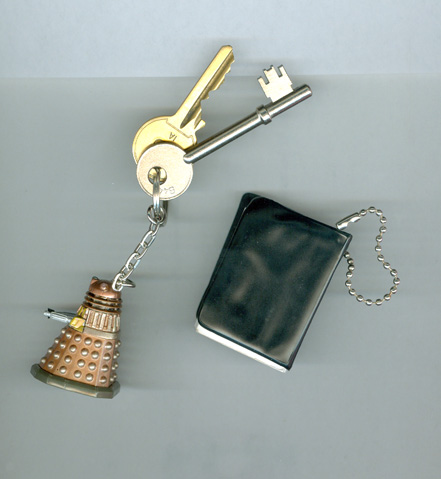
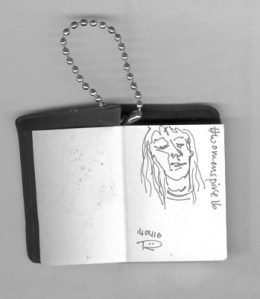
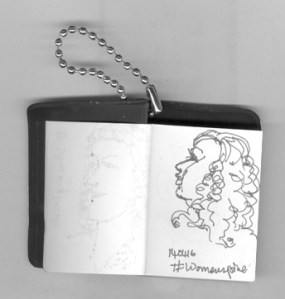
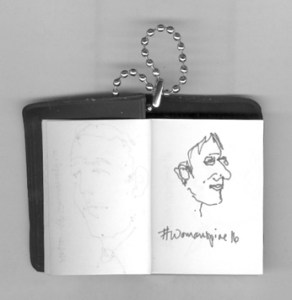
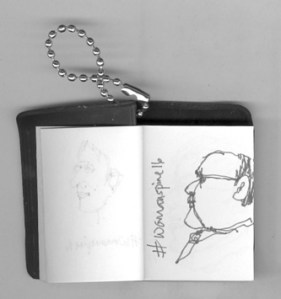
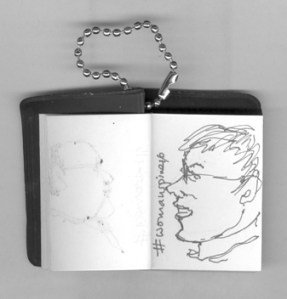
I haven’t been doing drawings in my sketchbook regularly for a while, so back to basics today with this sketch of Sparta Puss who occupies the footstool almost permanently. I drew with a Faber Castell Pitt drawing pen into a leather-bound, Steampunk style sketchbook. Richard The Bird, our family Senegal parrot, stayed a few days while his people were in holiday and went back last night but Sparta keeps staring at the space where his cage was, just in case…….

If you want to see some more of my artworks, please click here.

P.W.A.

richard bath
Richard just had a bath

Parrot With Attitude! Richard The Bird has been back with us for a few days while his humans have been on holiday. He bit me. He nipped the cat. He aimed poop out of his cage onto the floor with unerring accuracy. He took a dump over Husb’s favourite dressing gown. He screamed blue murder when we had chips until I gave him one. He has been totally disruptive, anarchic and brimming over with parrotitude for 5 days. I still love him though.

Richard the bird

Richard is a Senegal parrot and a beloved family pet, about five years old and due to unfortunate circumstances through no fault of anyone, is now on his fourth and hopefully forever home. He takes his holidays with us. He returns home frisky and refreshed. Can’t say the same about us. Sparta Puss and Ming the Merciless are glad to see the back of him.


The Three Rs

original

The Three Rs – Recycle, Repurpose, Reuse; it’s what I do with paper all the time. If something doesn’t work out, no point in keeping it hanging around. And as I use really good quality paper, I’m not going to bin it. I did a massive drawing on Fabriano Accademica about a year ago (you can see my fingers at the top), using my home-made walnut ink. I never liked the drawing so it’s been rolled up in a cupboard but I liked what I did last week when I was out and about drawing ancestral stones in West Wales. I drew over a similar walnut ink drawing (here) and decided to do some more when I go out again this weekend.

I chopped the big drawing into 14 smaller pieces that will fit onto my portable drawing board. Some of them looked great as they are but I decided to work into a few with some more walnut ink. I hadn’t used it since last summer; the original ink was fine but the two bottles of wash that I’d thinned out with some water both had a thin layer of mould on top. I scraped it off and it didn’t smell bad so I used it. The ink is thick and silky. It flows beautifully off the brush and leaves lovely, slightly shiny brush marks across the paper. I’m ready for two or three more drawing trips now, following the mythological trail of the Boar Hunt, Y Twrch Trwyth, from the Mabinogion, the book of ancient Welsh legends.

cut paper

I’m travelling around with archaeologist Dewi Bowen who is researching his new book. His previous book on the standing stones of Ancient Siluria (South East Wales) can be found here. Accompanying us is film maker Melvyn Williams who is recording a documentary about the process. Some of Melvyn’s short films can be seen here. If you want to see some galleries of my artworks, please click here.