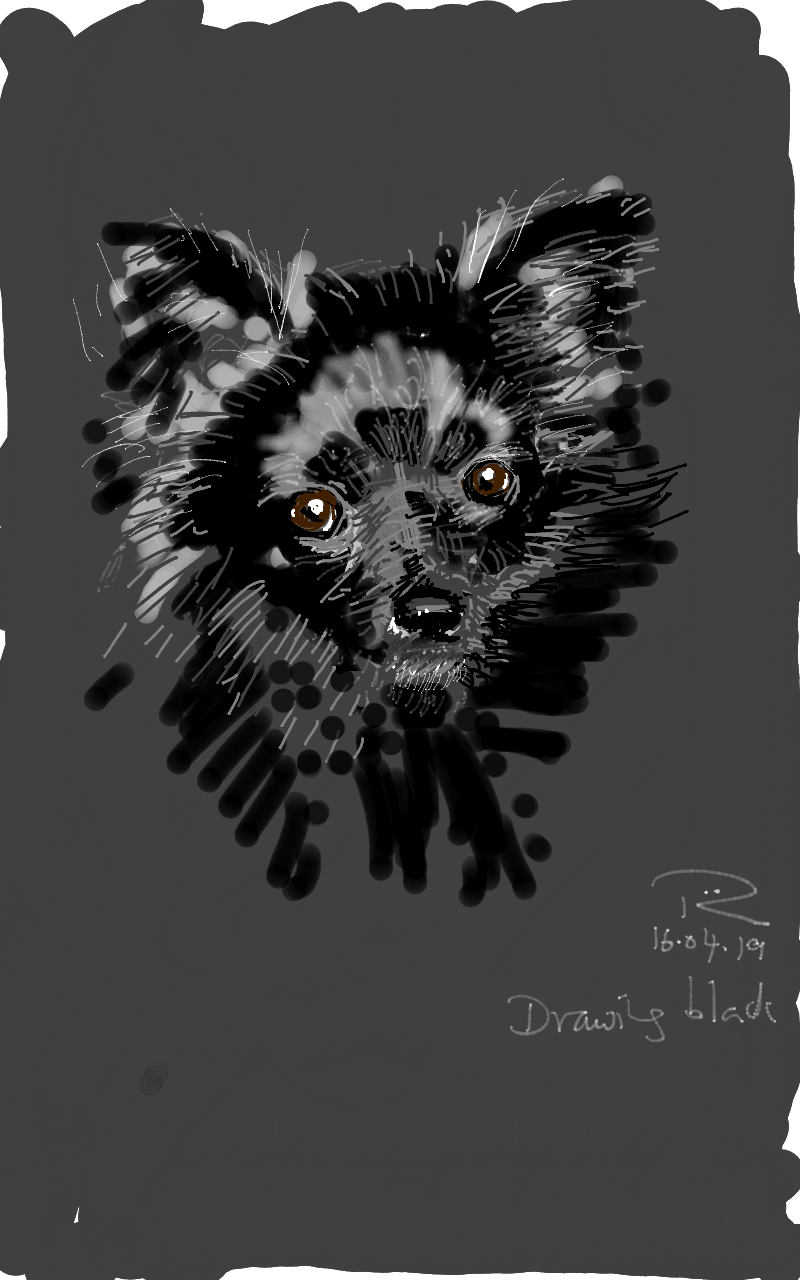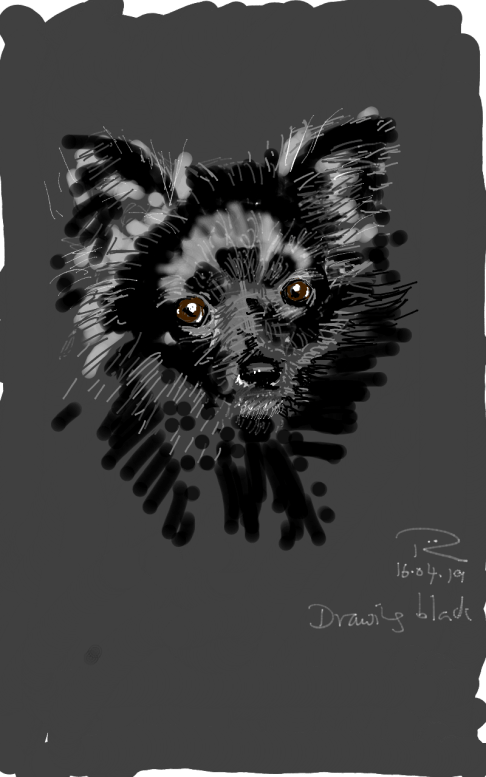
It’s cold and dark outside and the curtains are drawn and Sparta Puss has settled down to do some grooming in comfort. So I grabbed the Samsung Galaxy Note 8 tablet and did a quick scribble using a free Markers app.

It’s cold and dark outside and the curtains are drawn and Sparta Puss has settled down to do some grooming in comfort. So I grabbed the Samsung Galaxy Note 8 tablet and did a quick scribble using a free Markers app.

Just having a break from making art for a couple of days as the past few months have been so full on. It’s time to decorate the Xmas tree and I recently bought these wooden clockwork kits from Ugears which are made up into some pretty cool (I think) little tree decorations.
The tree looks good but Sparta Puss is eyeing up the baubles. She’s calming down a bit, though. When she was younger, she used to climb it and attack it so we had a few years of hanging it from the ceiling.

I’ve had a weekend off! It’s hard to do that when you’re self-employed so it’s a real treat when it happens. I saw lots of family and friends and I also did one of my favourite things when I’m relaxing, I did a load of cooking. I emptied the freezer of the last of our allotment fruit from the summer and I cooked up some preserves – apricot, damson and a cheeky jostaberry gin jam. And I made a chocolate buttercream sponge, topped with Maltesers, as a present for our niece who recently had a beautiful baby boy. She deserves it. Husb made the buttercream – he’s some sort of buttercream genius.

Then I cooked up a large pot of Cawl (a traditional Welsh stew) so thick I could stand the wooden spoon in it. I served it with suet dumplings, proper comfort food for the weather we’re having. Back to work with a vengeance tomorrow!
So, after two and a half months of research, preparation, creative blocks, blood, sweat and a lot of hard work, I finally finished carving my very large block of wood and did the first print. And breathe! The block has been sealed with three coats of shellac and methylated spirits (mixed 50:50) and I am using a Japanese lightweight paper, Hosho, in white for the main print and mulberry papers in red and blue for chine collé. The ink is Caligo / Cranfield’s Safe Wash and I’m taking the print by hand with Japanese barens.
I inked up mostly in black with some words picked out in red that I did with a different roller. I also prepared and applied mulberry chine collé. Then Husb lent me a hand to put the Hosho paper onto the block and to rub the back with the Japanese barens.

And here it comes. The first proof. The rest will be revealed in the New Year 😀 This is a commission for the Sky Art 50 programming which is scheduled for March 2019.


The Swansea Open, December 8th to February 2nd 2019, Glynn Vivian art gallery.
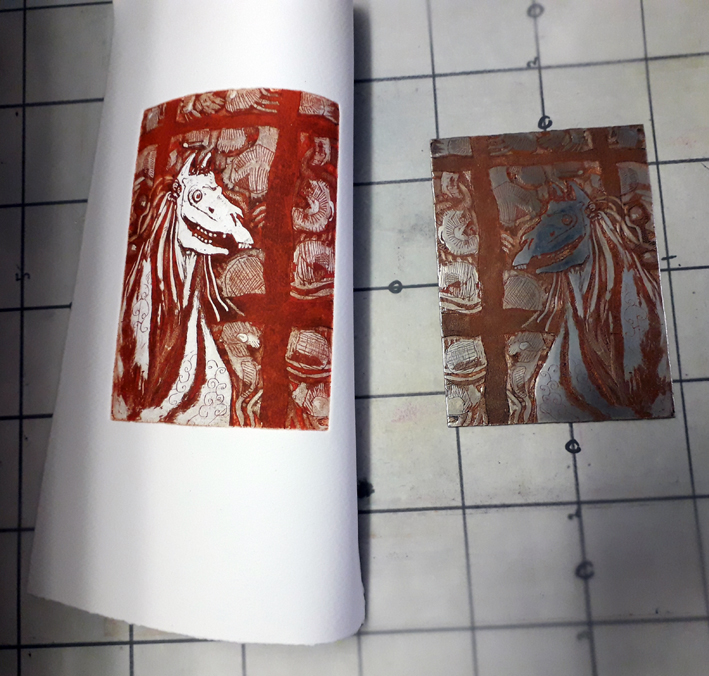
I just heard today that I have had 2 artworks accepted into the Swansea Open exhibition and I’m chuffed to bits as Swansea is full of talented artists and the competition is stiff. I submitted two monotypes of the Mari Lwyd, based on drawings I did in my sketchbook at the end of last year. The Mari Lwyd is an ancient Welsh tradition, where groups of revellers wander the streets and pubs accompanied by a life size puppet constructed around a decorated horse’s skull. It may hark back to the worship of the Celtic horse goddess, Epona and has links with Wassailing, May Day hobby horses and Yule celebrations..
![]()
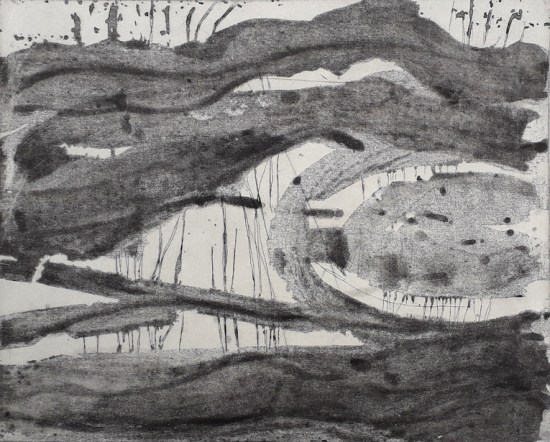
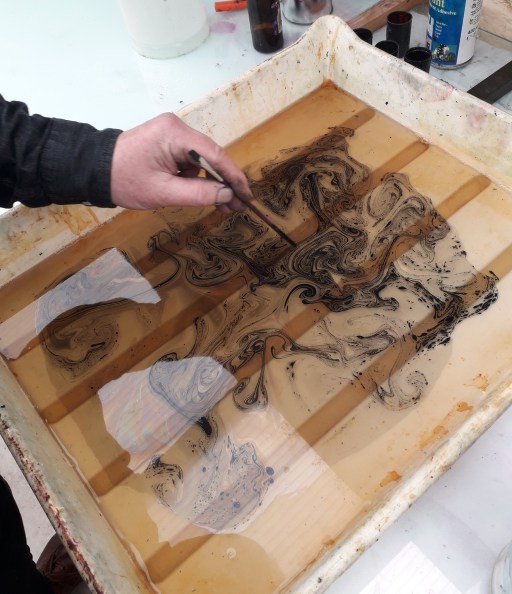
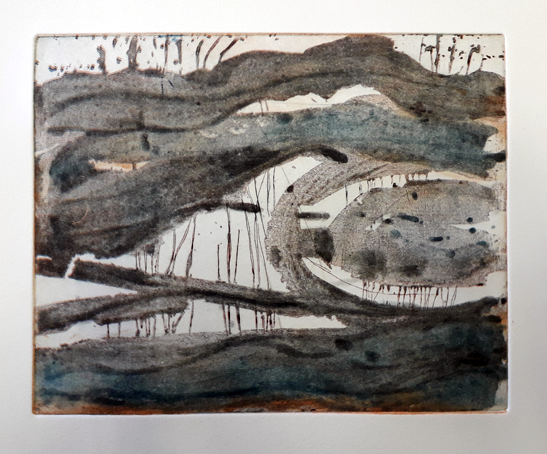
The two pieces are intaglio prints – an etching and a mezzotint – that I made during a weekend course with accomplished printmaker Andrew Baldwin at Trefeglwys Print Studios a couple of months ago. It’s a beautiful studio in an ancient building in Powys and I learnt so much from Andrew. He has developed an innovative low toxicity etching ground – B.I.G. – that can be used in both traditional and inventive ways. You can find out more about it here.

I did more sketching towards the end of my recent holiday in Italy, in Bologna, than earlier in Florence, mainly, I think, because making art is my profession and drawing while I’m on vacation feels like work. But after a few days I had itchy fingers and started to scribble in my sketchbook again. We visited some magnificent churches and cathedrals; this one below is the Basilica of San Petronio. The outside façade was left unfinished and in quite a rough state, which is in complete contrast to the fascinating interior, allegedly because the architect wanted to rival St. Peter’s in Rome and once the Pope got wind of it, he put pressure on to stop the project from being completed.

One of the many beautiful things inside is a gorgeous painting of Saint Christopher. I managed a very quick sketch which doesn’t do it justice at all. Another fascinating thing is the longest meridian line in the world, marking out a calendar on the marble floor. We stayed and watched it in action just after noon, where a large dot of sunlight appeared alongside the date shown on the floor. It was very exciting!
The holiday was arranged by New Scientist magazine and focused on Renaissance art, architecture and science, expertly led by Andrew Spira.

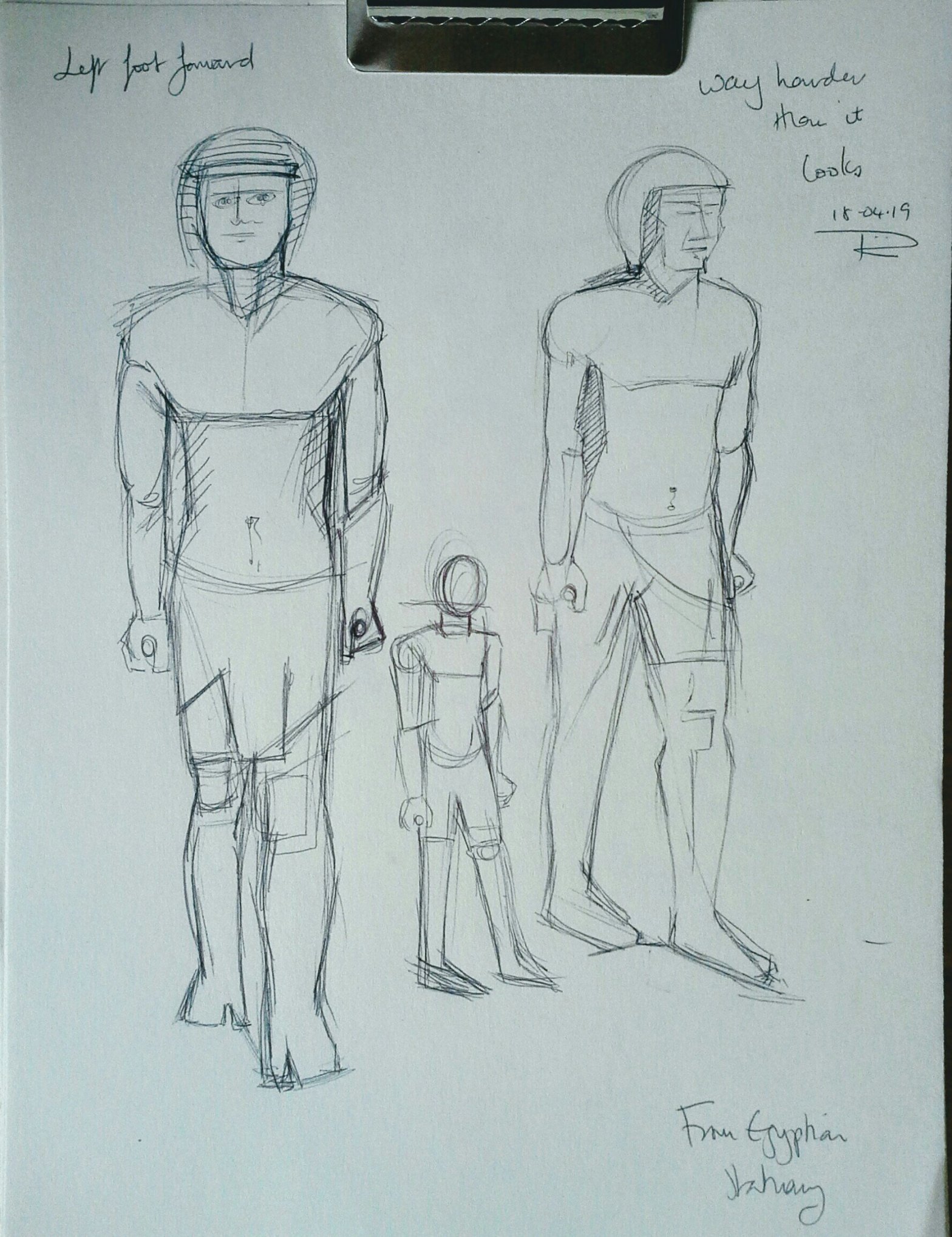
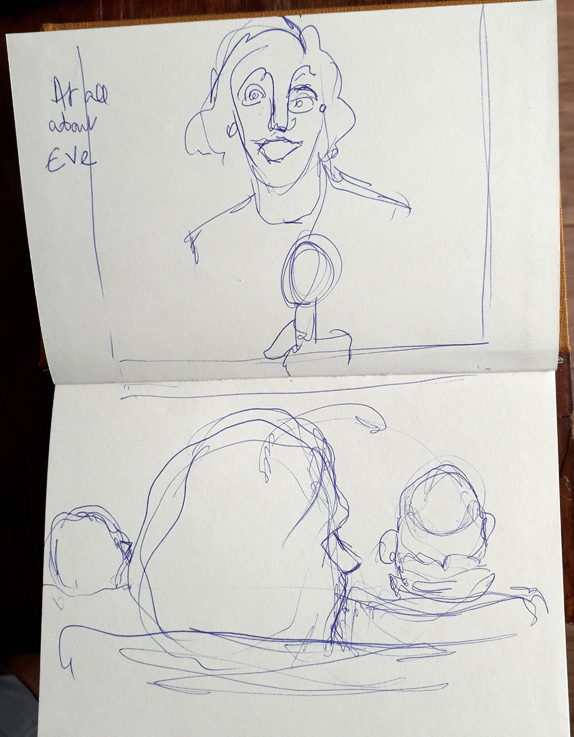
Another quick sketch from my recent trip to Northern Italy, this one from the Anatomical Theatre in the Palazzo Archiginnasio in Bologna. The theatre, built in 1637 by Antonio Levante, is a beautiful room in carved wood which looks, to me anyway, like a classical anatomy theatre should. There are two wonderful life-size wooden statues of the Spellati – the Skinless – by Ercole Lelli and I managed to scribble one of them.

Husb and I spent a few days away in Northern Italy, exploring museums and galleries on a guided tour arranged by New Scientist magazine. We took in a fabulous exhibition, “Beyond The Wave”, of Japanese Ukiyo e printmakers, Hokusai and Hiroshige in Bologna. I was fascinated by their process. To my surprise, the artists themselves didn’t do any printmaking, but just provided the initial simple ink line drawing (which didn’t survive the process). The drawing was transferred to a number of blocks, up to fifteen depending on the amount of colours, and cut by a carver. Finally the blocks were handed over to a printmaker to produce the fabulous full-colour images that we’re used to seeing today. This process reminds me of that used in the production of modern comics, with the artist producing pencil drawings, handing them over to an inker and then to a letterer. Coincidentally, Hokusai and Hiroshige are a great influence on Japanese Manga and Anime.
In my small sketchbook, I made some little studies of the beautiful simple compositions of some of the prints. Most had very sparse detail and the artist’s original line drawings are usually quite basic. The richness of pattern and colour are down to the skills of the printmaker who often used a blending technique called Bokashi which gives beautifully graduated colours. Ukiyo e prints became very fashionable through Japonism and had an enormous influence on later 19th century and 20th century European art and artists including the Impressionists and post-Impressionists and individual artists including Cassatt, Degas, Toulouse-Lautrec and van Gogh.

I draw lots of things. Today I drew blood! I’m back to reality after our short break to Italy and cracking on with carving my large woodcut (80 x 120 cms), a commission from Sky Arts TV channel. One of the occupational hazards of carving blocks for relief printing is the razor sharp tools that I use. I keep them in good condition with a leather strop and abrasive wax (below).

My attention slipped for a split second, the tool slipped for a split second, and blood spurted out of one of my fingers. Oh well, could be worse. I’ve almost finished carving and it’s my first injury, so I’m not doing too badly.


It’s tiring going round museums and galleries and churches, so Husb and I had a bit of a sit down in the Piazza Galvani in Bologna, which has a large statue of Luigi Galvani, the pioneer of bioelectromagnetics whose work inspired Mary Shelley’s novel, Frankenstein. When I draw statues, I try to get them from unusual angles and this one just happened to have a seat right behind the tails of his coat. Very convenient.