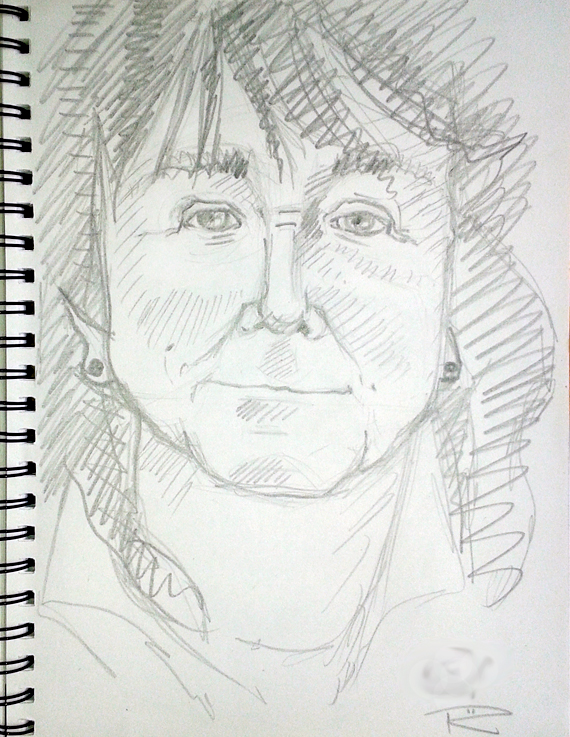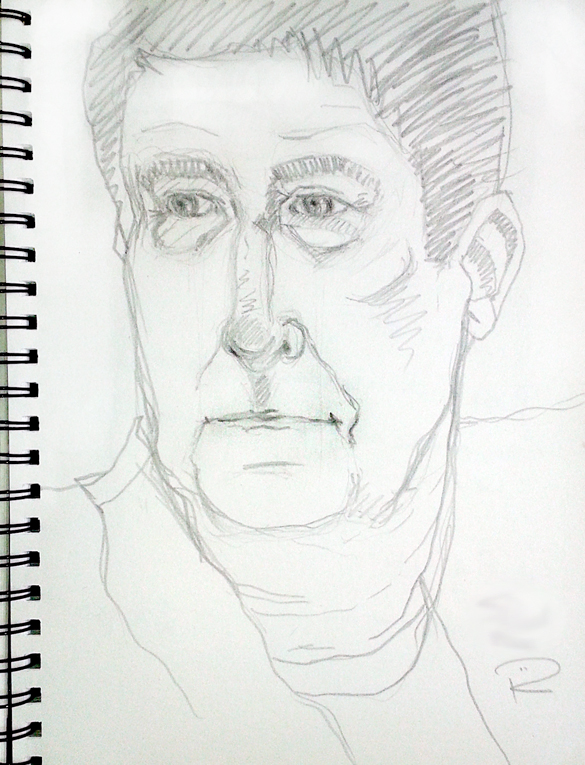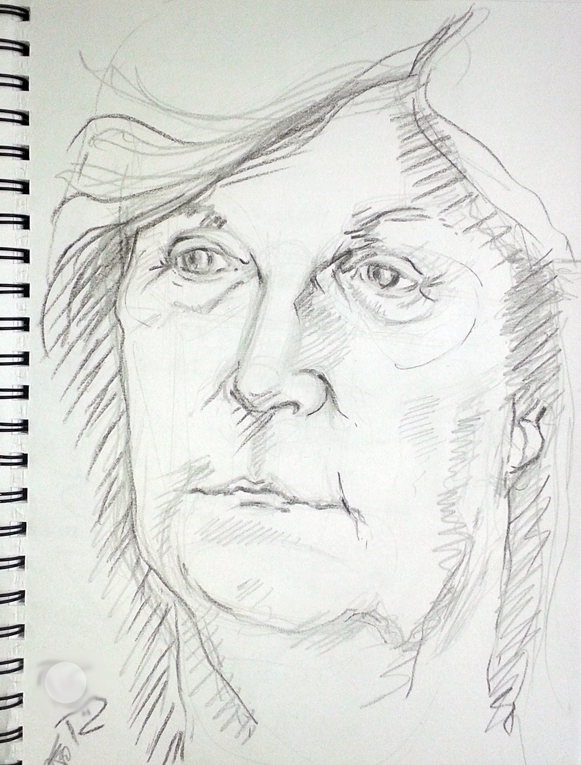
A journey around Carmarthenshire today, to find, record and draw more Neolithic stone monuments, the first is the Is-coed Stone just outside the gorgeous seashore village of Ferryside. And now I’m tired and aching zzzzzzzzzzzzzzzz
The Iscoed Stone, Ferryside, Carmarthenshire
I’m travelling around South West Wales with archaeologist Dewi Bowen who is researching his new book on Neolithic / Bronze Age monuments. His previous book on the stones of Ancient Siluria (South East Wales) can be found here. Accompanying us is film maker Melvyn Williams who is recording a documentary about our experiences. Some of Melvyn’s short films can be seen here. I’m currently working on a series of expressive drawings of ancestral sites and if you want to see some of my other artworks, please click here.
The weather forecast is reasonable, showery in the morning but picking up later, so tomorrow we’re out and about in some mountainous areas on the trail of some ancient stones. I’ve been working on some Fabriano paper in my home-made walnut ink and I’ll be taking some pieces to draw on. I like doing this prep beforehand, I don’t like working directly onto white, it’s inhibiting. Sandwiches made, biscuits packed, walking boots cleaned of the thick mud from last week, maps packed, ready to go………..
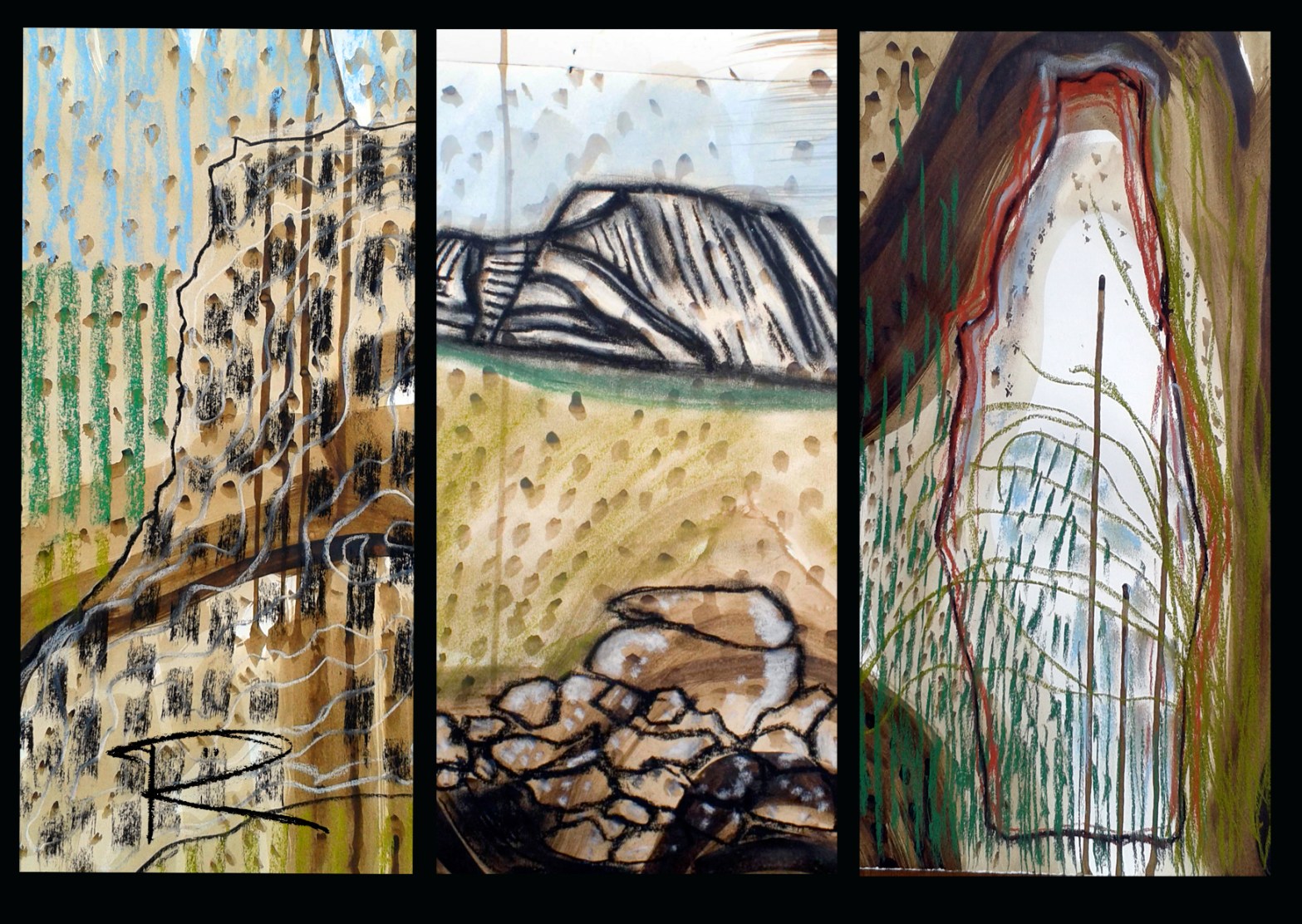
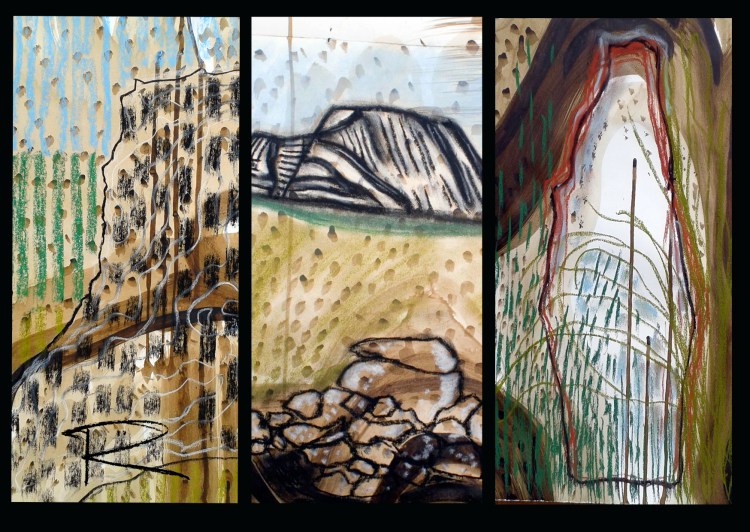
Working on Fabriano paper with my home-made walnut ink, I’m drawing expressively from my experiences trekking up local mountains to draw Neolithic and Bronze Age stones. The ink flows like liquid silk, holding the brush strokes when undiluted and moving freely across the paper when thinned out with water to make a variety of washes. I’m laying down shapes and textures across several sheets of paper and then I’ll decide how to work into them, whether I’ll go back to my original drawings for inspiration or keep on drawing expressively without any references except my memory and imagination.
Continuing with the work I was doing yesterday, and will probably be doing over the next few days, working onto Fabriano paper with my home-made walnut ink, making expressionistic drawings inspired by, but not directly related to, the several days I have recently spent wandering mountains around South Wales to draw Neolithic and Bronze Age stone monuments. At the moment I’m building up the ink washes with sponges, brushes and cloths with no particular focus. Once I’ve completed a few more, I’ll go back and take a look at them again and see how to develop them.
I’m travelling around South West Wales with archaeologist Dewi Bowen who is researching his new book on Neolithic / Bronze Age monuments. His previous book on the stones of Ancient Siluria (South East Wales) can be found here. Accompanying us is film maker Melvyn Williams who is recording a documentary about our experiences. Some of Melvyn’s short films can be seen here. I’m currently working on a series of expressive drawings of ancestral sites and if you want to see some of my other artworks, please click here.
Here’s something scary, I’m getting out of my comfort zone which is working from what is in front of me. I’ve been clutching to the comfort blanket of working from reality all my life and now I’m trying to let go. And I am not enjoying it one bit. But making art is something I don’t particularly enjoy anyway, if I want to enjoy something I make a cake. That’s my hobby. Art is my vocation. And it’s hard work, lots of work, continuous self-doubt and always pushing against complacency.
I’ve been going out and drawing Neolithic and Bronze Age ancestral stones over the past few weeks and struggling to make them relevant to me. I don’t want to churn out picturesque landscapes, that’s why I’ve tended to avoid doing landscape art in the past. I’ve been trying different techniques to take me away from realism or topographical drawing and into something expressionist, gestural, emotive, visceral.
I’ve started ripping up big-ish pieces of Fabriano paper and daubing, sponging, painting them with my home-made walnut ink without reference to the real world, photos or drawings. I’m relying on the feelings, sensations, thoughts I have experienced when I have been out drawing the ancient monuments.
Oh crikey! Does that make me sound like a hippy?!!!! 😀 😀 😀
I’m travelling around South West Wales with archaeologist Dewi Bowen who is researching his new book on Neolithic / Bronze Age monuments. His previous book on the stones of Ancient Siluria (South East Wales) can be found here. Accompanying us is film maker Melvyn Williams who is recording a documentary about our experiences. Some of Melvyn’s short films can be seen here. I’m working on a series of expressive drawings of ancestral sites and if you want to see some of my other artworks, please click here.
Husb and I drove down to Pembrokeshire today to pick up some relatives from the Irish ferry. We went down an hour earlier planning on finding some ancient monuments and do some drawing. Unfortunately the weather had a different idea and threw torrential rain and gales at us. We found a dolmen called Devil’s Quoit near a village called Angle but it was way across an incredibly muddy field that was full of cows in calving season, when they can be violent. It was the worst conditions I have tried to draw in and it just wasn’t possible so we went for a drive around the village and saw these sheep sheltering at the foot of this strange round tower.
When we got back we settled in for some mindless TV and I made a golden syrup steamed sponge pudding for tea, with lashings of custard. No drawing done though.
Yesterday we trekked up the mountain near Trecastle to visit the Nant Tarw stone circles and cairn. The Bronze Age circles are made up of small, rather insignificant stones and although fascinating historically and culturally, they were not particularly inspiring visually. However, the scenery was absolutely spectacular, with the Fan Brycheiniog face of Mynydd Du (the Black Mountain) in the distance.
I used Fabriano paper prepared with my own home-made walnut ink. I choose each piece carefully, looking between the paper and the subject until a piece of paper suggests itself to me. I took a non-representational stance with this drawing, barely sketching the outline of the stones in white conte crayon in the foreground and focussing on the snow strewn Fan Brycheiniog instead, using white conte, black carbon and a pale blue oil pastel for the sky.
We walked back by a more direct route, following the River Usk down to the car park. Although it was quicker, it was much rougher terrain and despite the glorious sunshine, the ground was boggy and muddy after months of almost unbroken rain. Although we were near the source of the Usk and it was quite narrow, the river banks were slippery, treacherous with deep, very deep, mud. I was about to cross onto a stepping stone and suddenly my left leg disappeared up to my knee in slurping sludge, my balance went and I pitched backwards into the thick mire, covering myself in the oozing mud from the waist down, to the mirth of my fellow travellers. Luckily I was wearing good boots and waterproof trousers and jacket, which saved my clothes but not my dignity. We gave up then and went off to Brecon for an icecream.
Out and about again today with archaeologist Dewi Bowen and film maker Melvyn Williams searching out ancient stone monuments. We had a tough walk up to a late Neolithic stone cairn on Mynydd Bach Trecastell not far from the little village of Trecastle in Powys. To be honest, the cairn wasn’t particularly interesting, I’ve seen better, but it’s site is truly spectacular. We walked about 2 miles to get there, mostly uphill and across, firstly, the Usk tributary Nant Tarw, up and over the mountain and secondly crossed the river Usk, relatively small as we were near its source.
In the distance is The Black Mountain, Y Mynydd Du, huge and slab like and covered with snow which stratified into black and white stripes like a 1960s op art painting. This became the focus of my drawing as much as the stones on the small cairn. Fan Brycheiniog is the part facing me here. Despite the snow in the distance, we were pretty warm after our strenuous walk in the clear, bright Spring sunshine. Song larks hovered and sang all around us, groups of soldiers ran past us on manouvres (they looked terribly young) and red kites (barcud in Welsh) circled, eventually landing on the cairn after we left, to see if there were any pickings.
I’m travelling around South West Wales with archaeologist Dewi Bowen who is researching his new book on Neolithic / Bronze Age monuments. His previous book on the standing stones of Ancient Siluria (South East Wales) can be found here. Accompanying us is film maker Melvyn Williams who is recording a documentary about our experiences. Some of Melvyn’s short films can be seen here. I’m working on a series of expressive drawings of ancestral sites and if you want to see some of my other artworks, please click here.
Drawing ‘The King’s Quoit’ from another angle, I could see underneath the capstone, through the inky darkness below the huge rock into the bright sunlight beyond.
The shape reminded me of being in a cave, looking out through the entrance and it occurred to me that the ancient people who created these monuments might have lived in caves, or at least sought sanctuary and shelter in them and I wonder if they echoed this experience when they built their stone megaliths across the landscape?
The King’s Quoit is situated on the cliff path above the glorious beach at Manorbier on the South Pembrokeshire coast in Wales. It’s a sub-megalithic type, where the back of the capstone rests directly on the ground without an orthostat supporting it. I drew with carbon and white conte crayon onto Fabriano paper that I had prepared in advance with my homemade walnut ink. I had originally done a very large drawing in the ink but didn’t like it so I ripped it down into smaller pieces that would fit onto my portable drawing board. I liked working over an existing image – I don’t like working directly onto white paper, it’s intimidating.
It was chilly and very windy on the cliff – here I am drawing in the short video below….
This drawing is available to buy in my Artfinder gallery here.
Husb and I went for a drive on Easter Monday, exploring some of the South Wales coastline that we hadn’t seen before, the lovely beach of Manorbier / Maenorbŷr in South Pembrokeshire. It’s a very ancient settlement with local evidence of flint microliths from the Mesolithic and Neolithic ages and this magnificent dolmen, The King’s Quoit, looking out over the sea from the cliff path. There are Bronze Age burial mounds, an Iron Age enclosure and evidence of Anglo Saxon farming. The imposing castle and parish church are Norman. It has a railway station and can be reached by train on the lovely West Wales line.
Sometimes the Welsh, Maenorbŷr, is translated as Manor of Pŷr, but an alternative meaning I have seen is ‘Holy (or sacred) Stone’, which would make sense, given the magnificence of this Neolithic burial chamber. The weather was gorgeous, sunny and bright and the beach was busy with families enjoying their Easter break. But it was quite cold and blustery up on the cliff where I settled down to draw the dolmen – you can see what it was like in this short video.
I did this drawing in carbon and white conte crayon onto Fabriano Accademica paper that I had prepared with my home-made walnut ink. This is now for sale in my Artfinder gallery, please click here to see more images of it.